Math Curious Blog
Discover articles, tutorials, and explorations of mathematical concepts for curious minds.
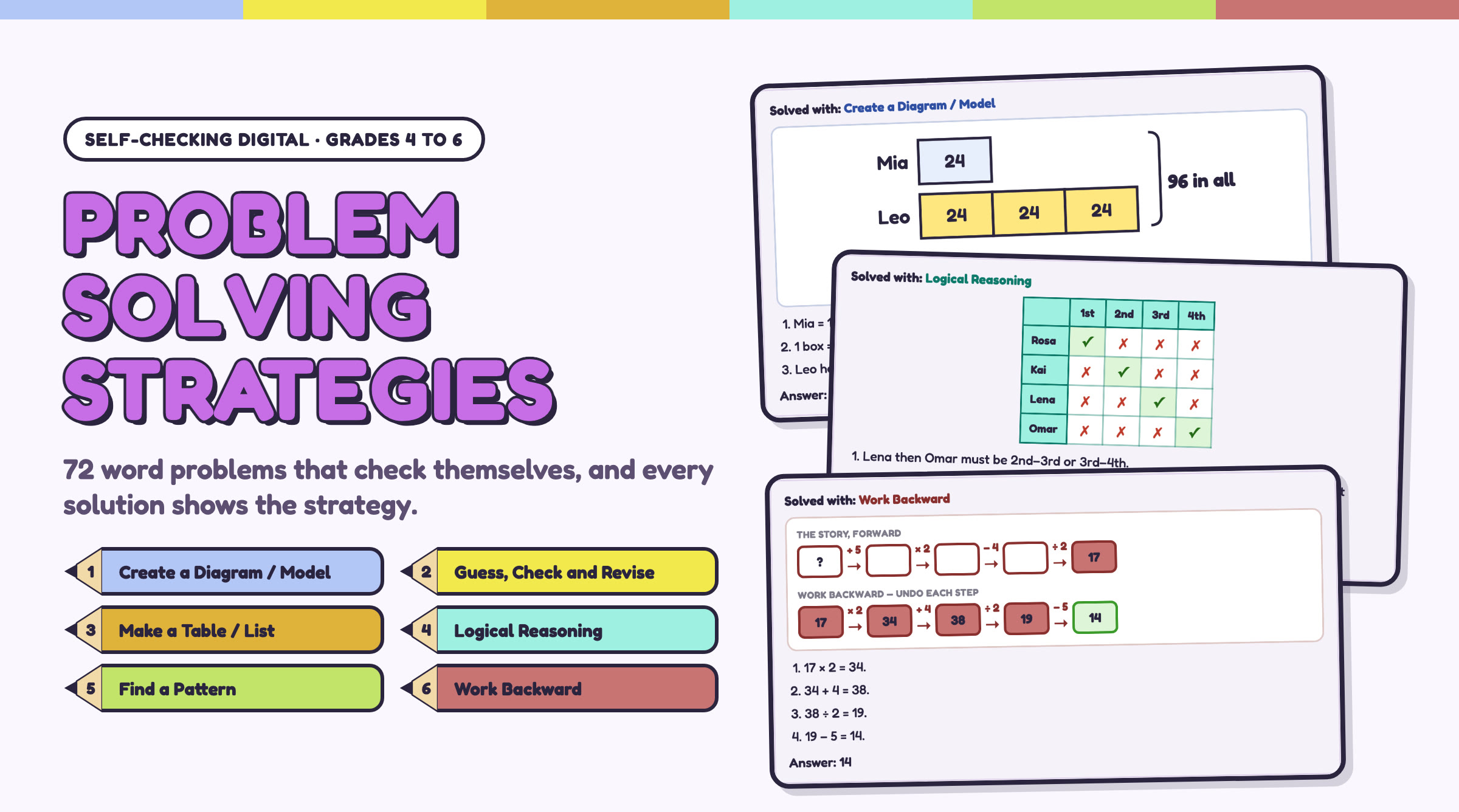
Problem Solving Strategies: 112 Self-Checking Word Problems
The six problem solving strategies explained, with free word problems for grades 4 to 6, and a self-checking digital game where every solution shows the strategy.
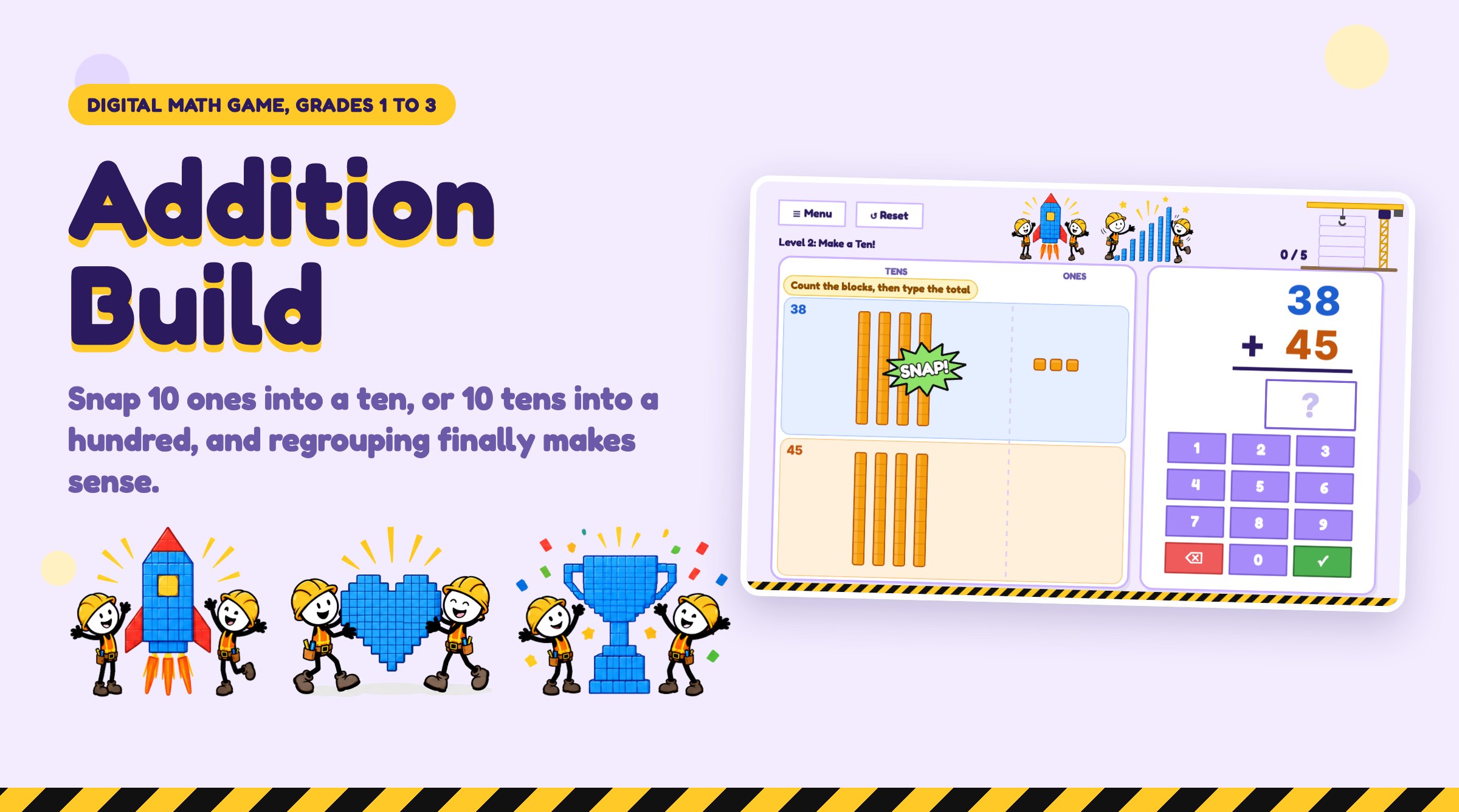
Addition with Regrouping Game: Addition Build
Addition Build is a no-prep digital game for grades 1 to 3: students loop 10 ones and SNAP them into a ten, or 10 tens into a hundred, so regrouping in addition makes sense.
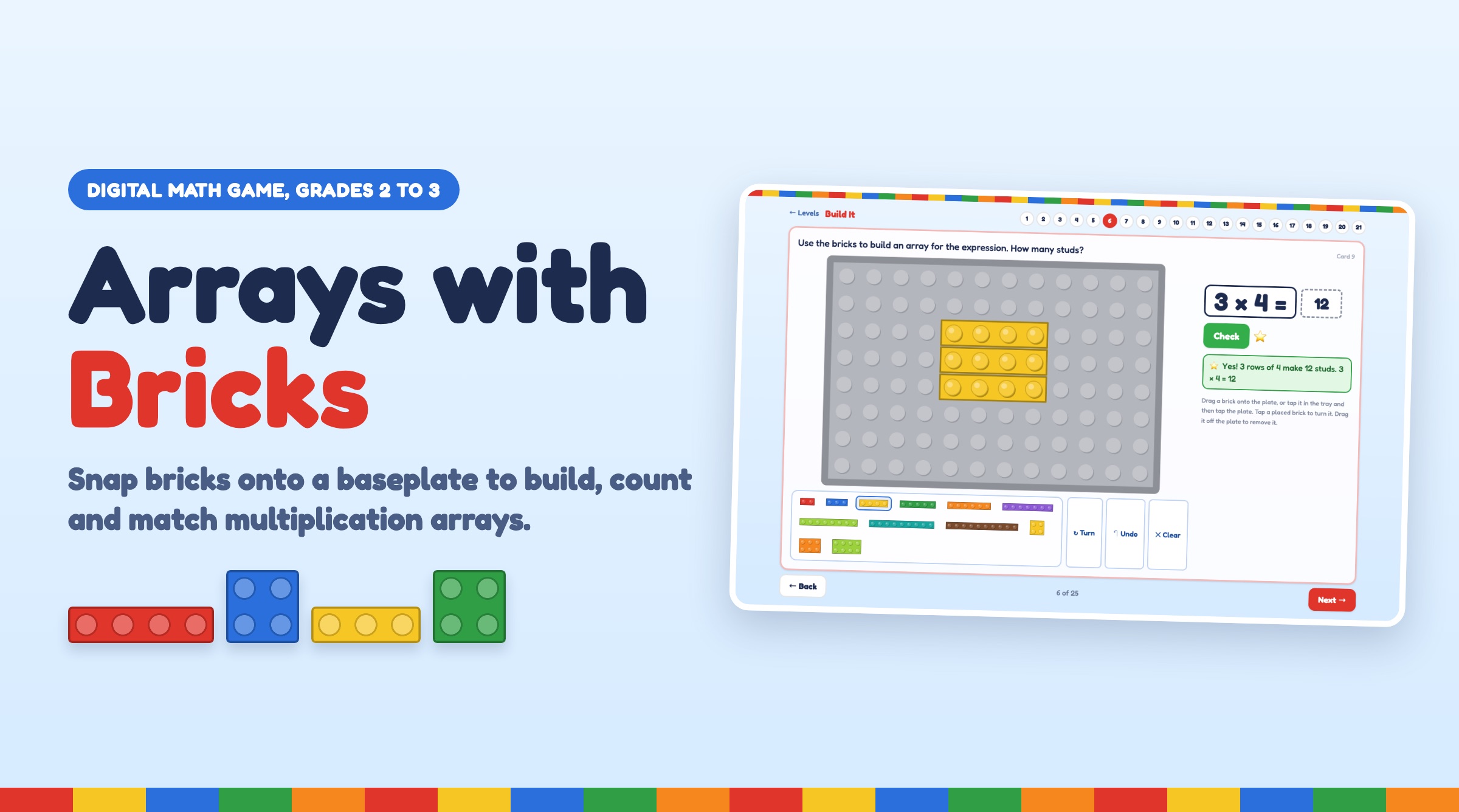
Multiplication Arrays Game: Arrays with Bricks
Arrays with Bricks is a no-prep digital game for grades 2 and 3: students snap bricks onto a baseplate to build arrays and equal groups, find factor pairs and explore the properties of multiplication.
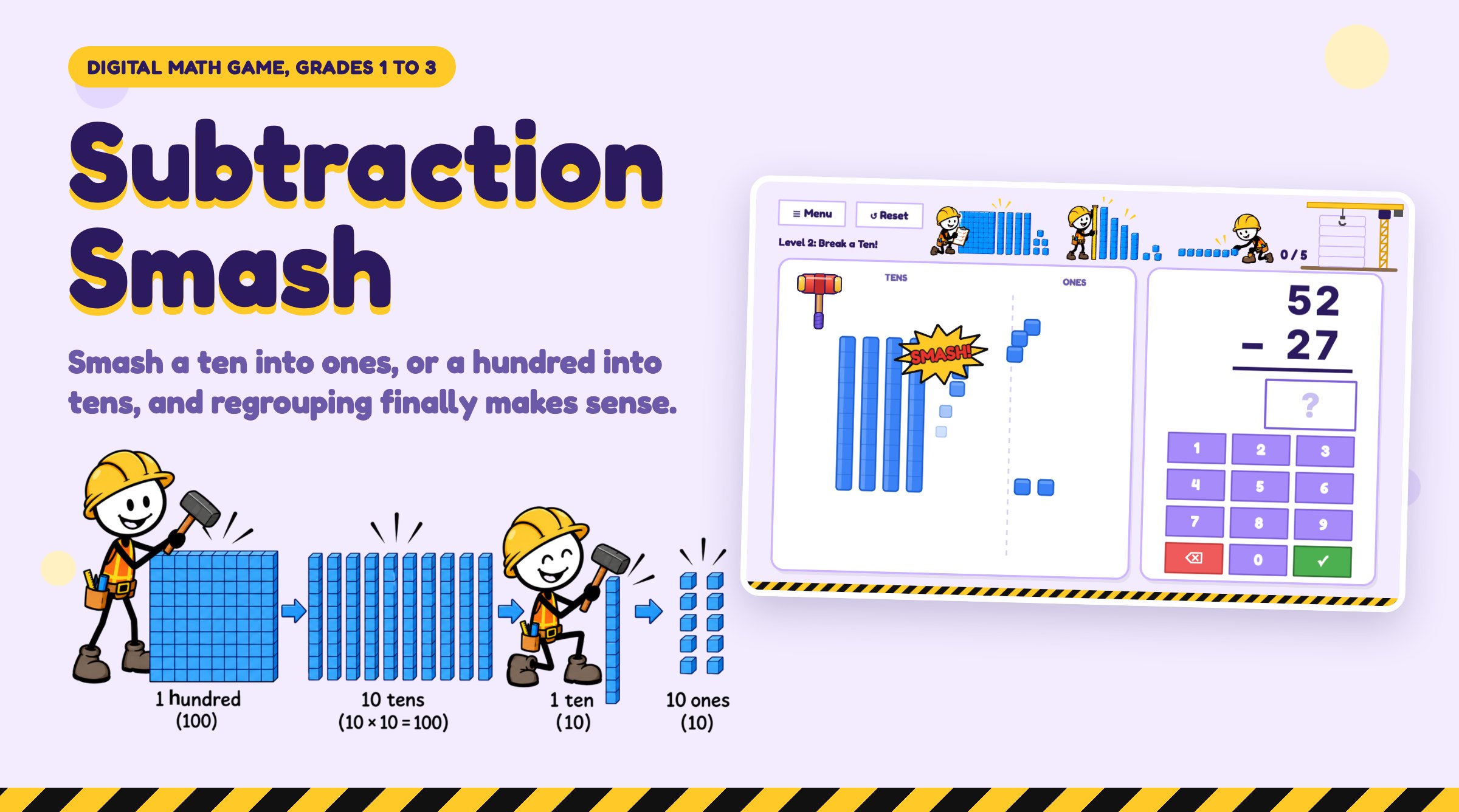
Subtraction with Regrouping Game: Subtraction Smash
Subtraction Smash is a no-prep digital game for grades 1 to 3: students subtract with base-ten blocks and smash a ten into ones, or a hundred into tens, so regrouping makes sense.
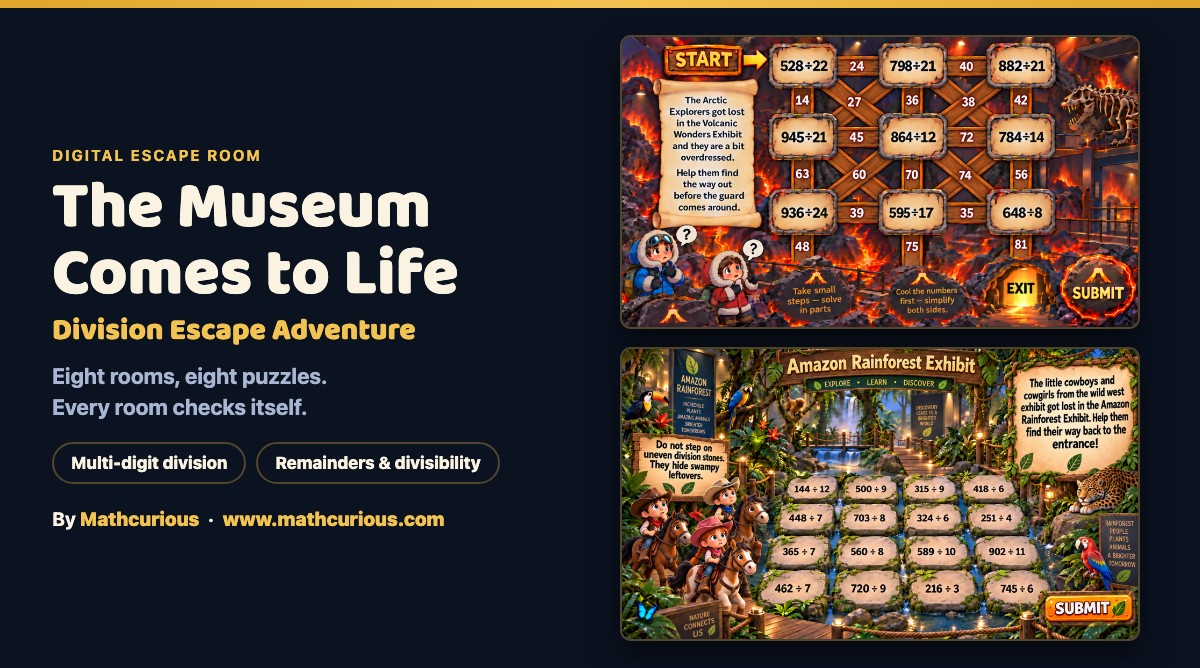
The Museum Comes to Life: A Division Escape Room for Grades 4-6
A no-prep digital escape room for multi-digit division: eight self-checking museum rooms with long division, remainders and divisibility rules for grades 4-6, plus a free room to try with your class.
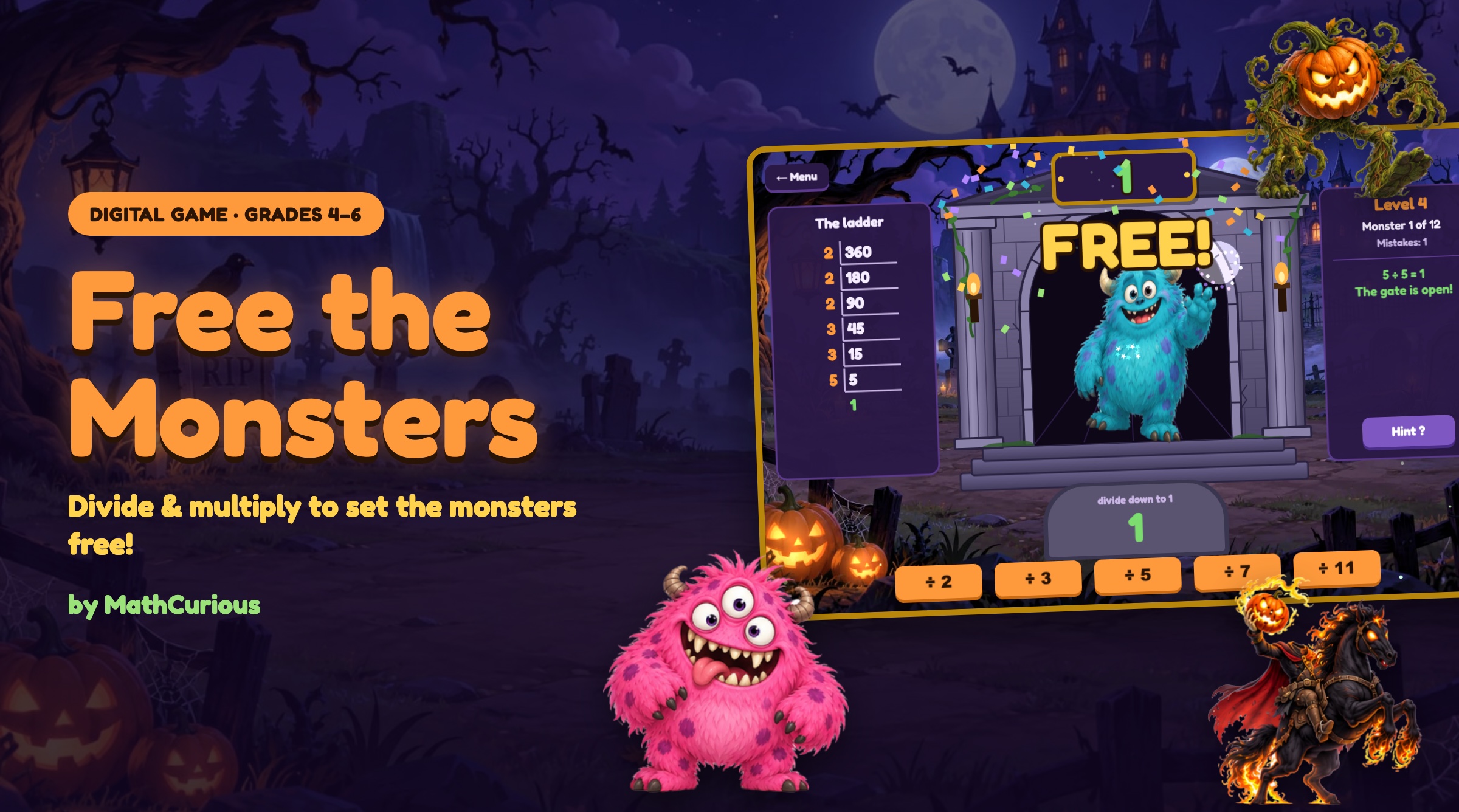
Multiplication, Division, Factorization Game - Free the Monsters
Free the Monsters is a no-prep Halloween math game for grades 4–6: divide each monster’s number down to 1 to set it free, practising multiplication and division facts, divisibility, multiples and factors.
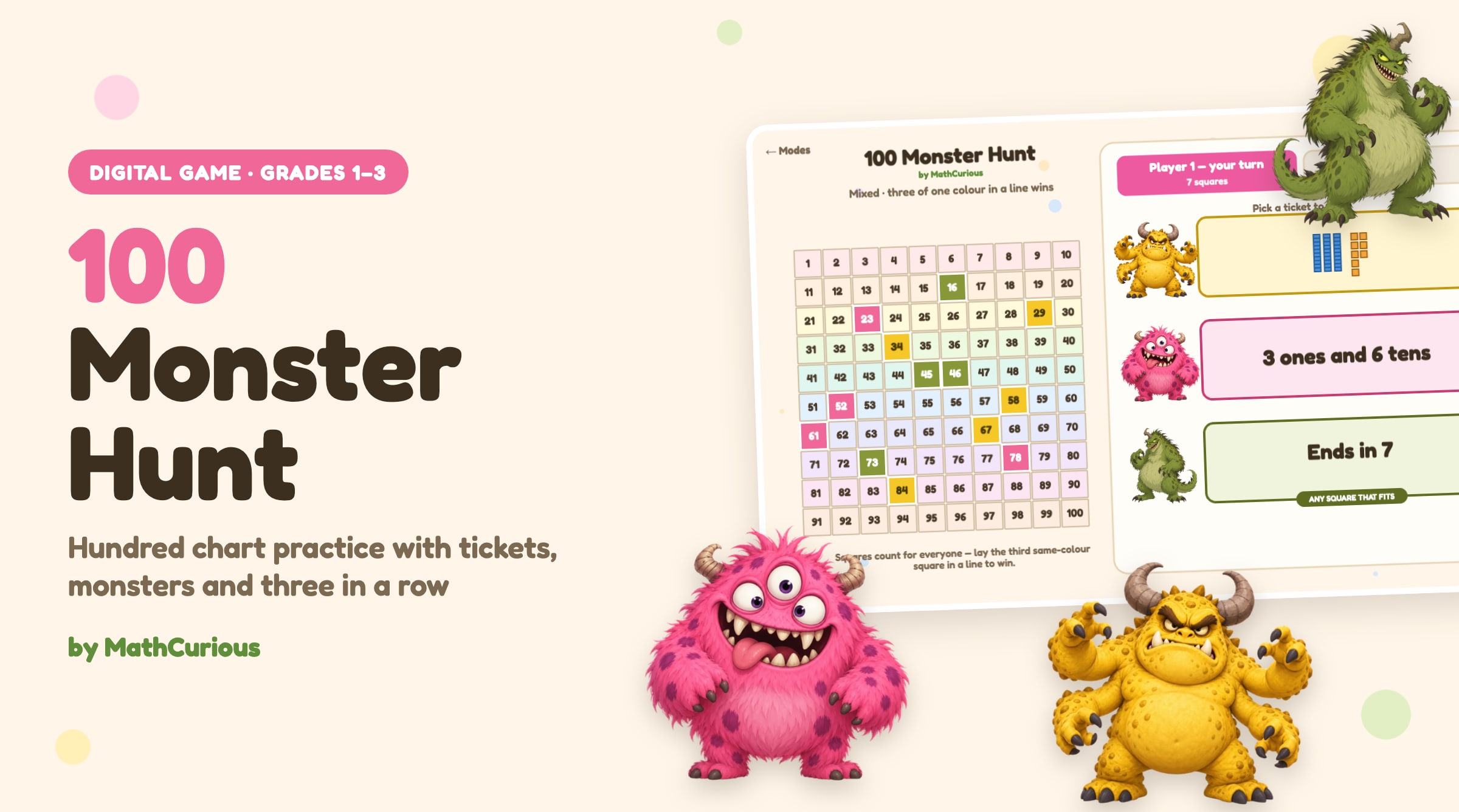
Digital Hundred Chart Game-100 Monster Hunt
100 Monster Hunt — a no-prep digital hundred chart game where every ticket is a number in disguise.
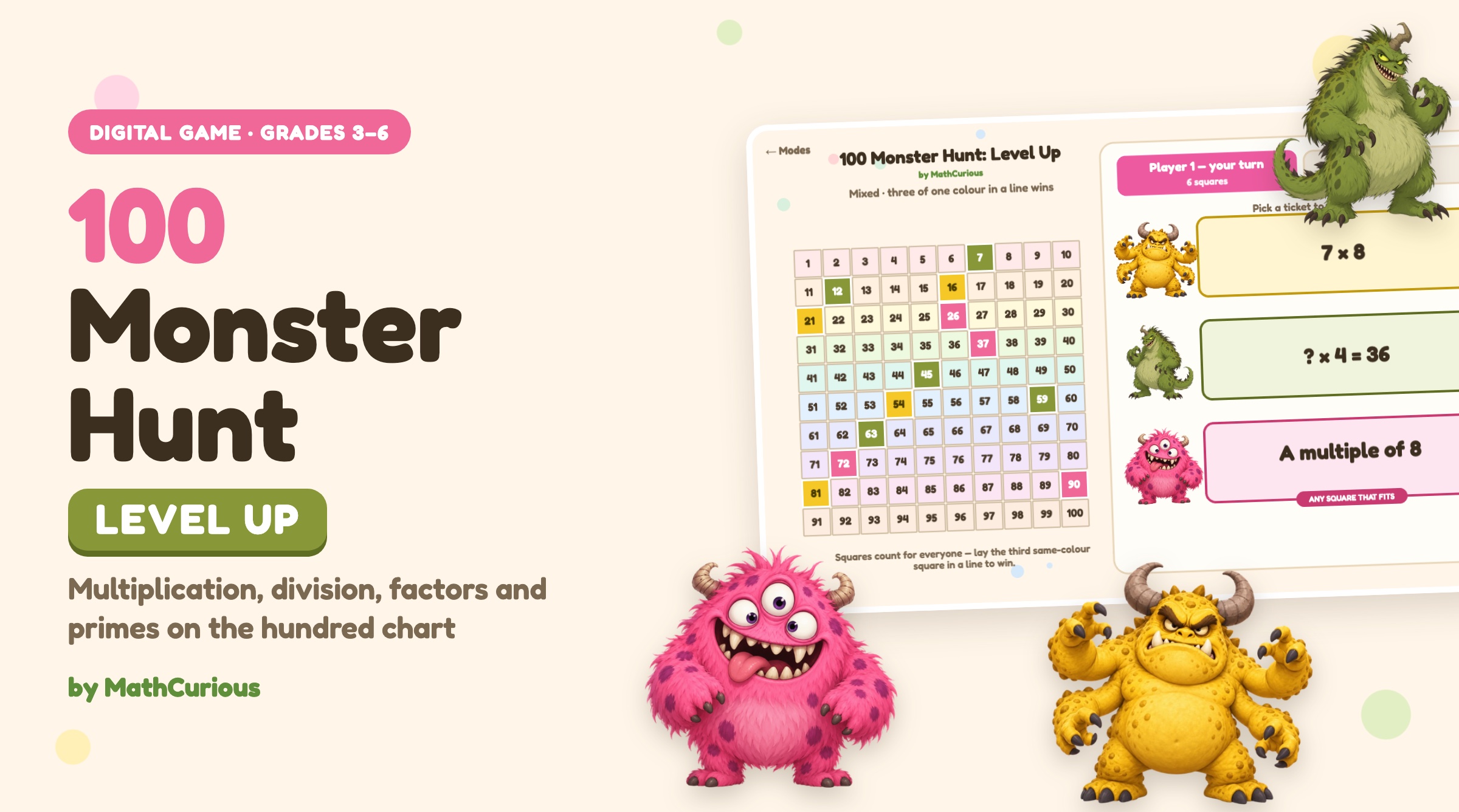
100 Monster Hunt Digital Game CHALLENGE - Level Up
100 Monster Hunt: Level Up is a no-prep digital hundred chart game for grades 3–6, with multiplication, division, factors, primes and order of operations.
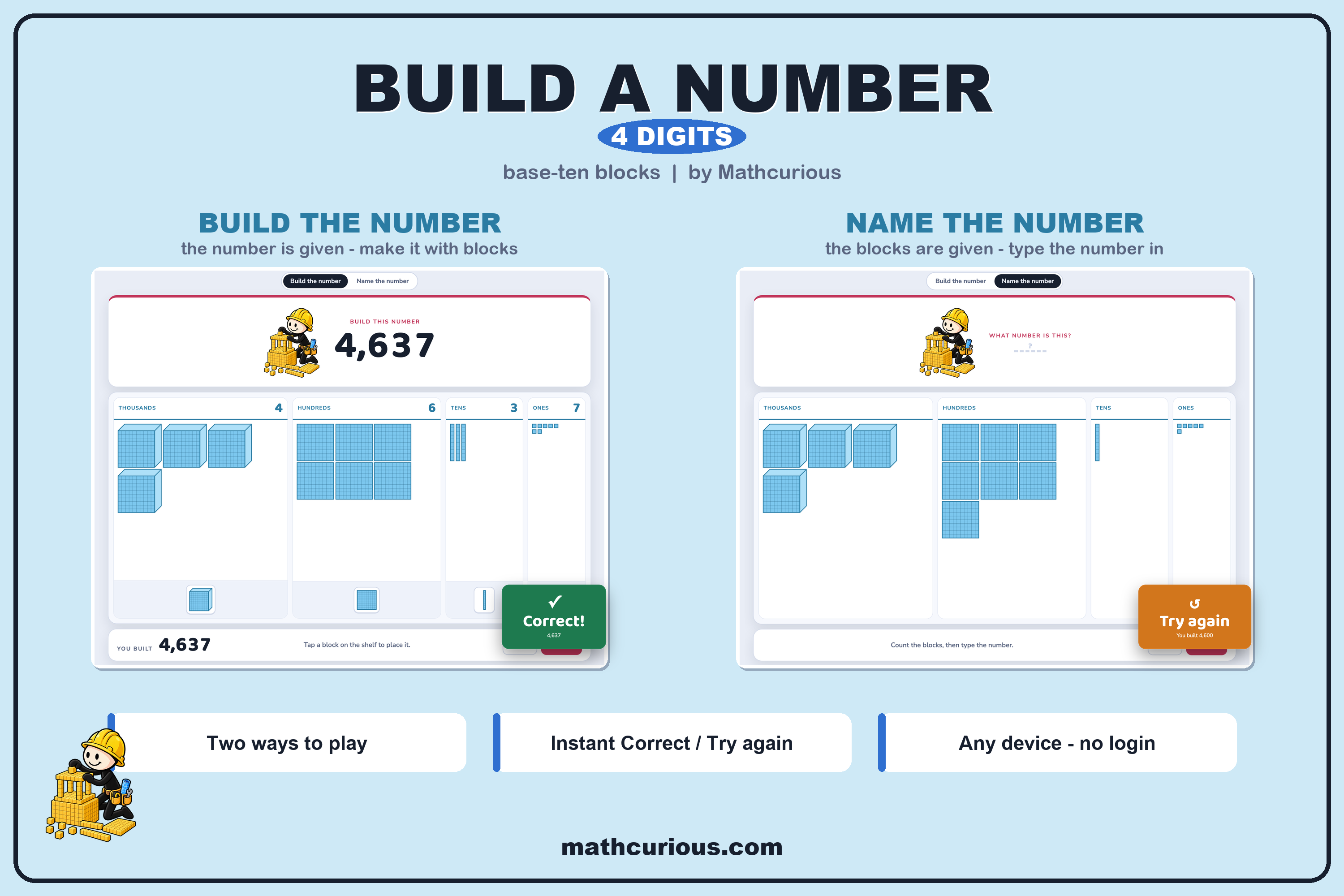
Digital Place Value Tools- 3-6 Digits
A Digital Place value tool that students can actually pick up and move. 2 Ways to play: Build/represent the number and recognize the number. Activity 1 : A number appears at the top of the screen. Students tap base-ten blocks from the shelf to build it on the place-value mat — and the mat tells them straight away whether they got it. The running total updates with every block, so a mat holding 4 hundreds, 3 tens and 8 ones visibly becomes 438. Activity 2 : The number is represented and the students need to name it and type it in. It is the base-ten block lesson you already teach, without the tub of plastic blocks to hand out, count back in, or find under a desk.