Decimal Place Value with Base-Ten Blocks and Number Lines: Build a Decimal
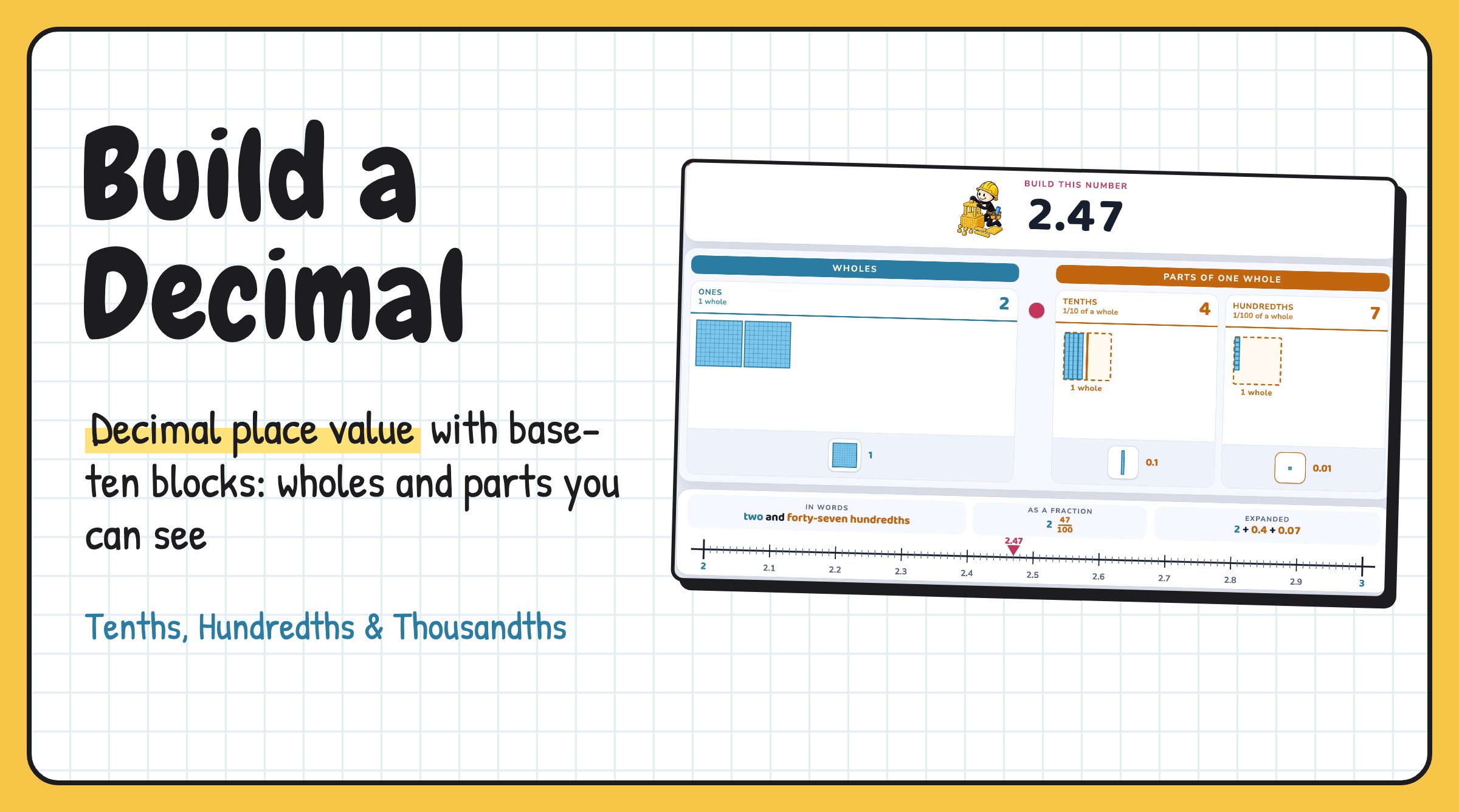
Build a Decimal is a digital place value tool that makes that worth visible: students build decimals with base-ten blocks, and the mat always shows which blocks are whole ones and which are parts of one whole.
It covers tenths, hundredths and thousandths, and every number is shown in words, as a fraction, in expanded form and on a number line as students build it.
Watch it in action
The tool runs in any web browser. There's nothing to print, cut or laminate, and students don't need logins.
Wholes and parts, kept apart
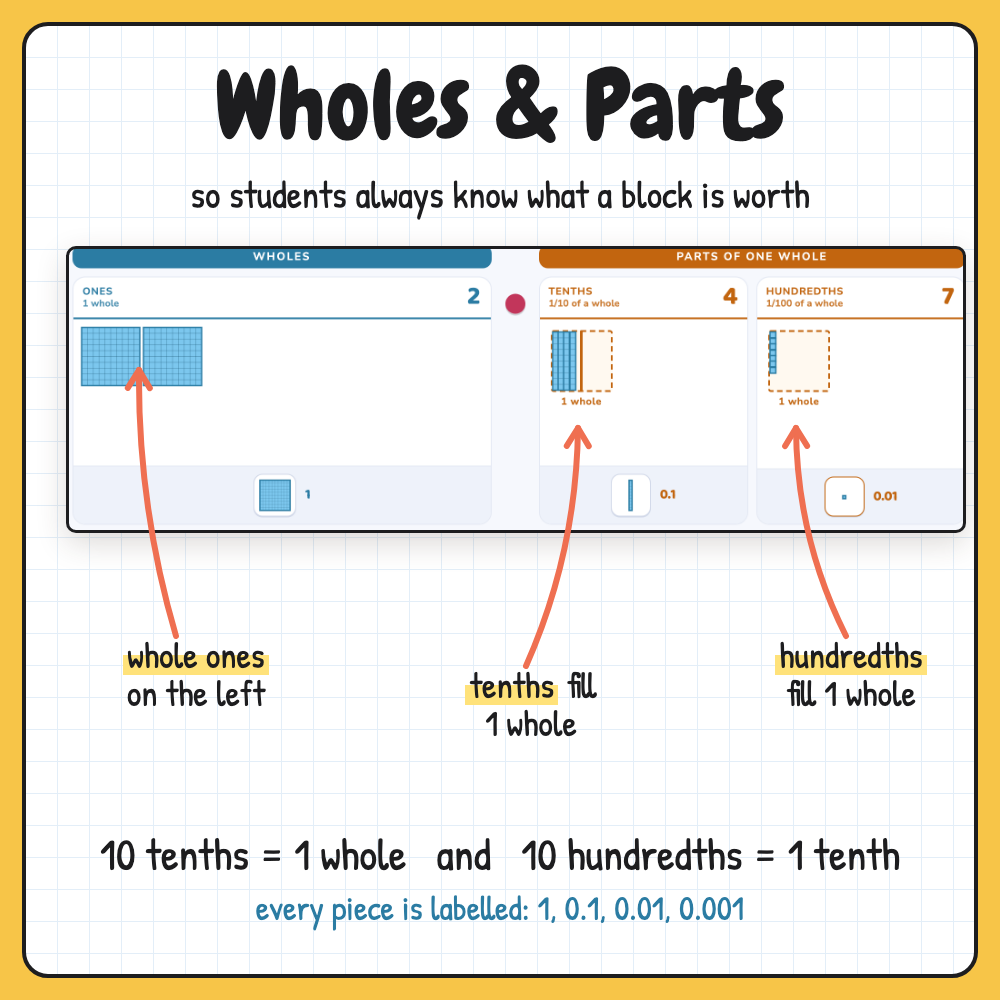
The biggest source of decimal confusion is the whole. With base-ten blocks, a flat might be 100 one day and 1 the next. Build a Decimal settles it on the mat itself:
- Wholes sit on the left, under their own heading. In the Tenths and Hundredths versions, a flat is one whole.
- Parts of one whole sit on the right, past the decimal point. Tenths and hundredths fill a dashed outline of that same whole, so students see that 10 tenths make a whole and 10 hundredths make a tenth.
- The tenths outline has a strong line down the middle, and whole ones sit in rows of five, so counting is quick.
- Every piece on the shelf is labelled with its value: 1, 0.1, 0.01 or 0.001.
All the blocks are the same colour, just like the real ones in your classroom. The headings do the sorting, not the colours.
See it four ways
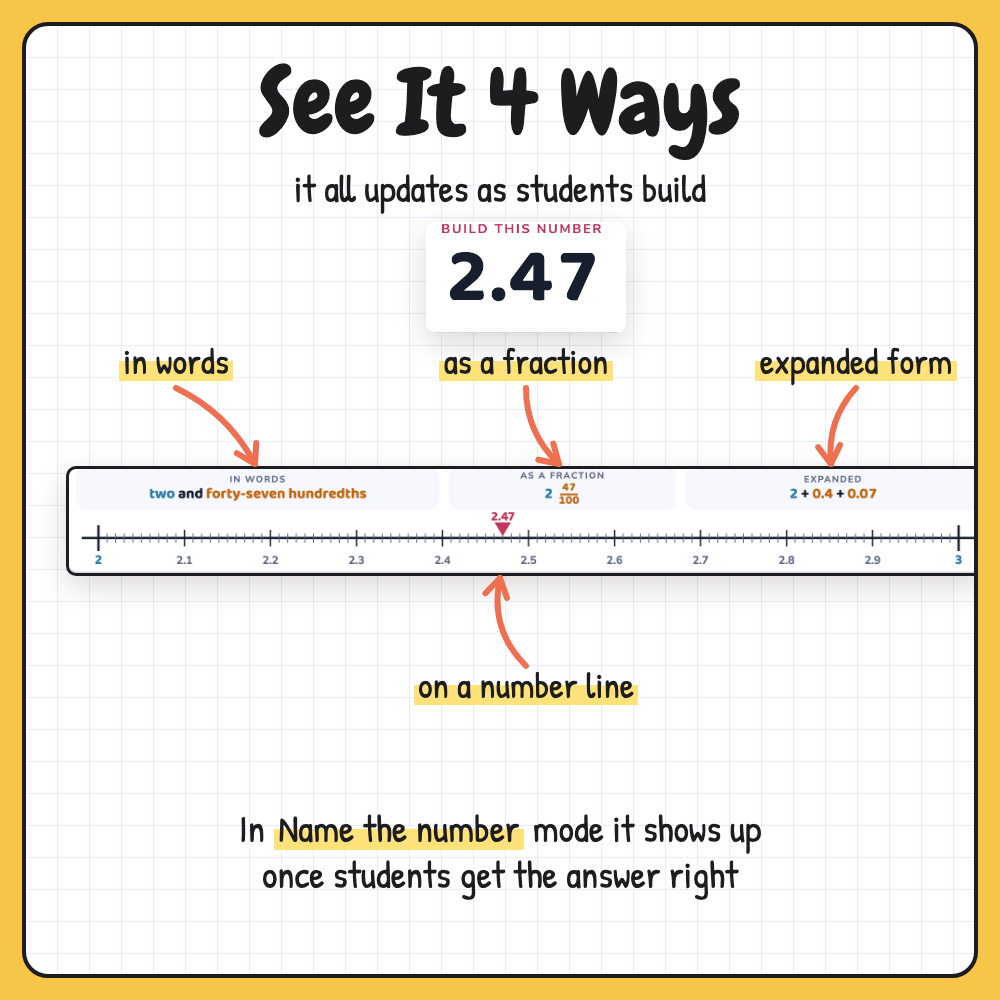
As soon as a block lands on the mat, the strip underneath updates:
- In words: two and forty-seven hundredths
- As a fraction: 2 47/100
- Expanded form: 2 + 0.4 + 0.07
- On a number line: a marker between 2 and 3, a little before 2.5
Students hear the place name in the number ("hundredths"), connect it to the fraction, and see how big the decimal really is.
Three versions
Tenths
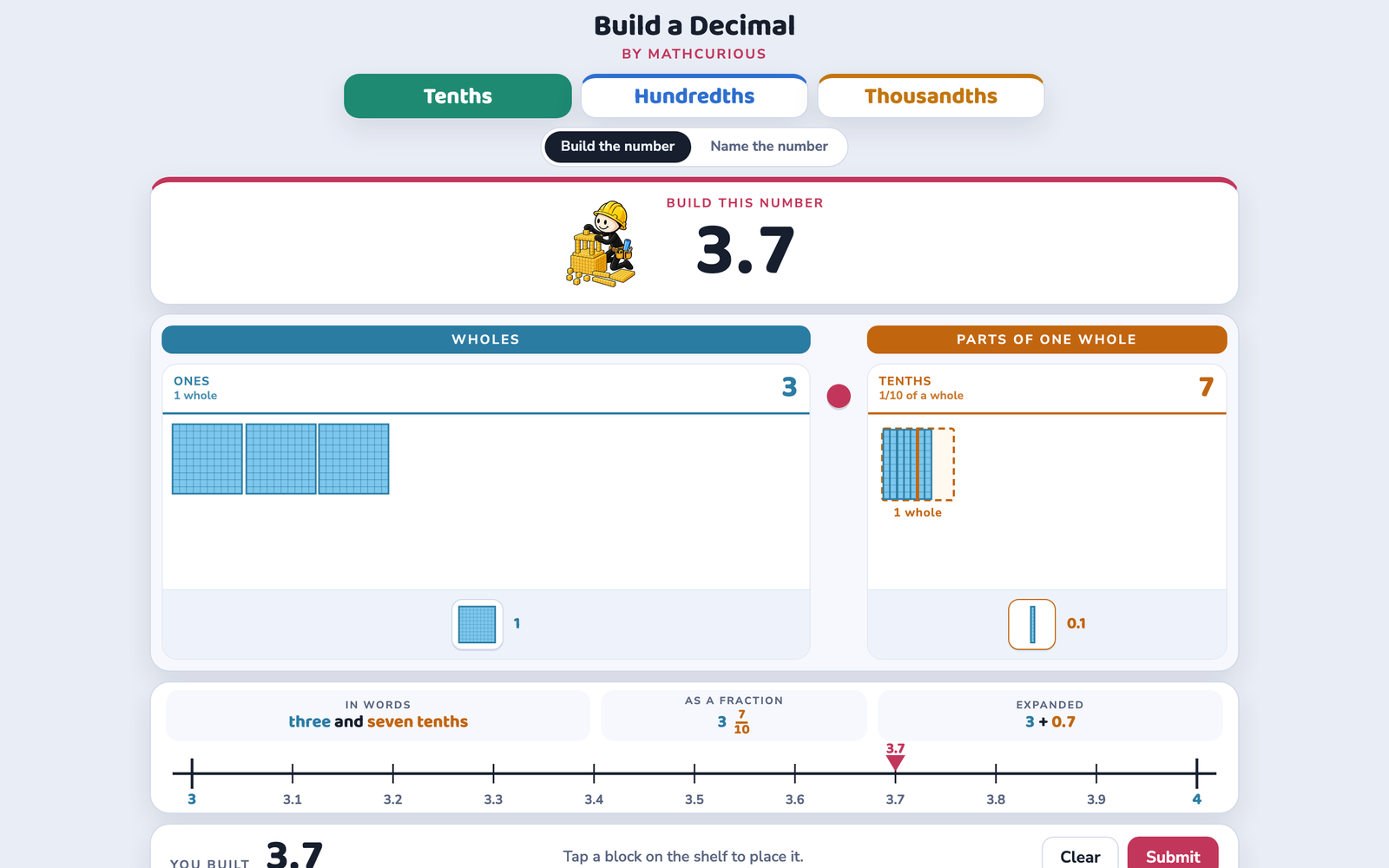
Ones and tenths, like 3.7. A great starting point: every tenth is one strip of the whole.
Hundredths
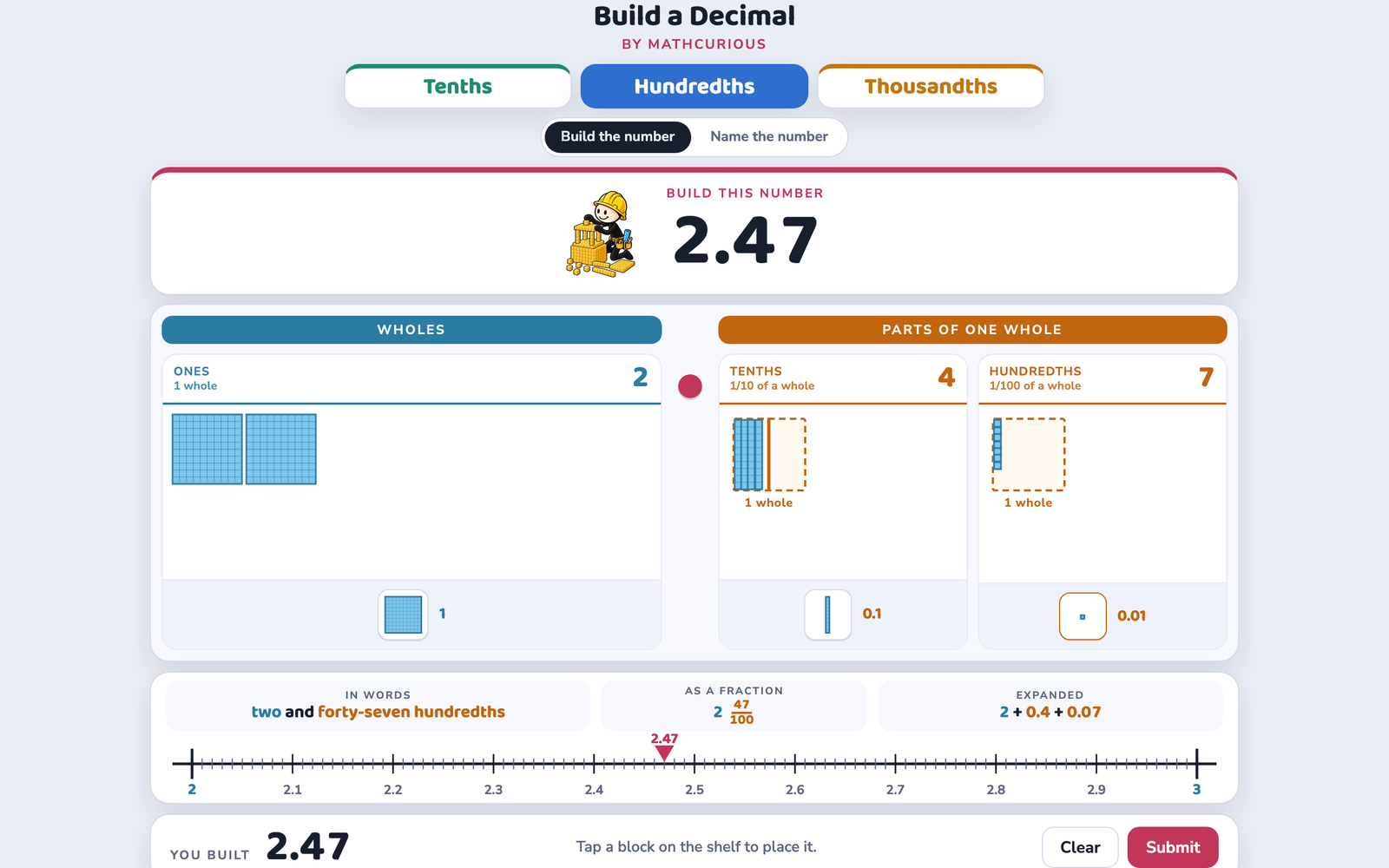
Ones, tenths and hundredths, like 2.47. Hundredths fill their whole one strip at a time, so ten of them line up exactly with one tenth.
Thousandths
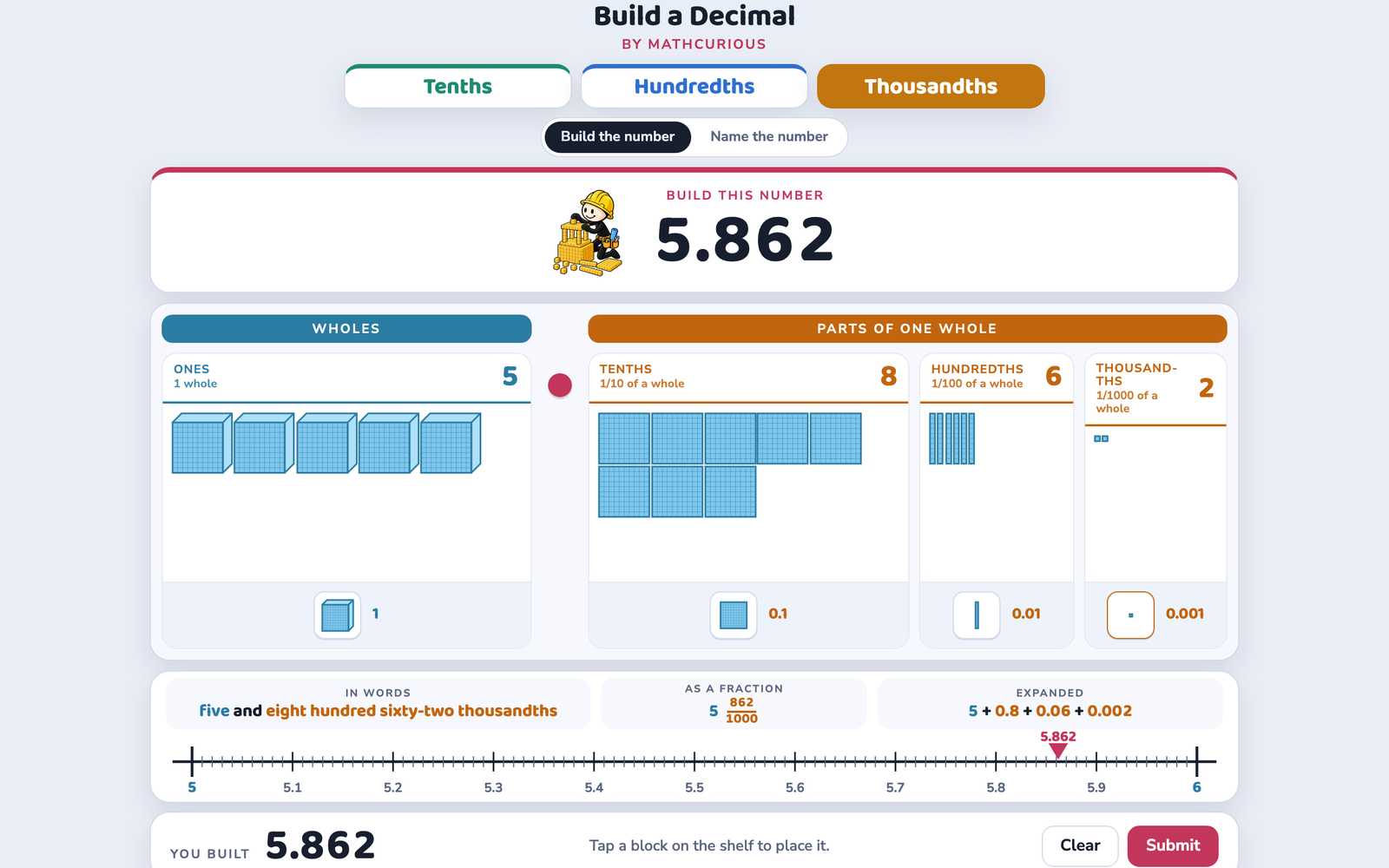
Ones to thousandths, like 5.862. Here the big cube is one whole, so a flat is a tenth, a rod a hundredth and a small cube a thousandth. It's a great moment to ask: "What is one whole now?"
Each version also has its own link, so you can assign exactly the level you want.
Build it, or name it
Every version has two modes.
- Build the number: a decimal appears and students build it with blocks, then check.
- Name the number: the blocks show a decimal and students type it. The words, fraction and number line stay hidden until they get it right, then appear as the explanation.
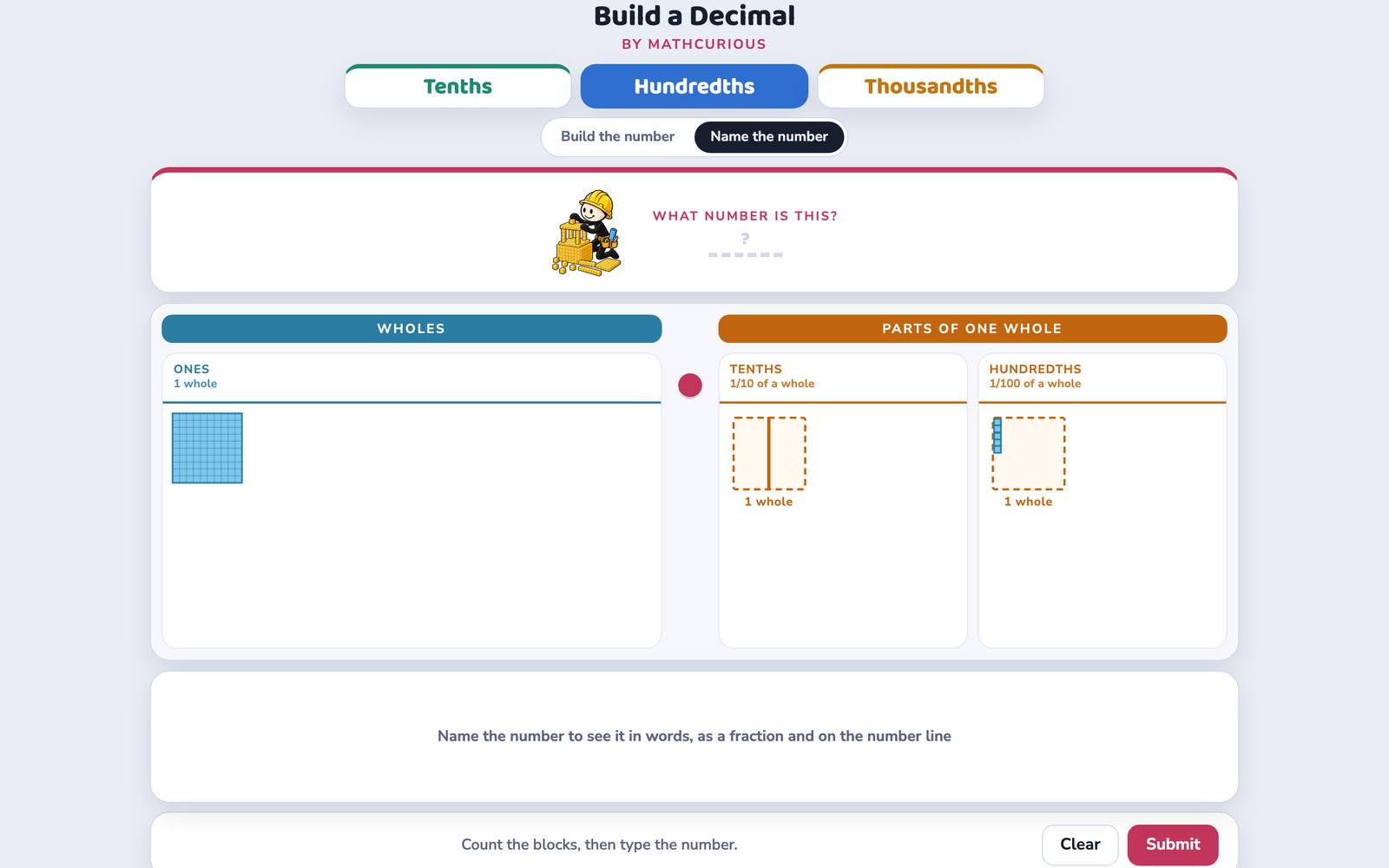
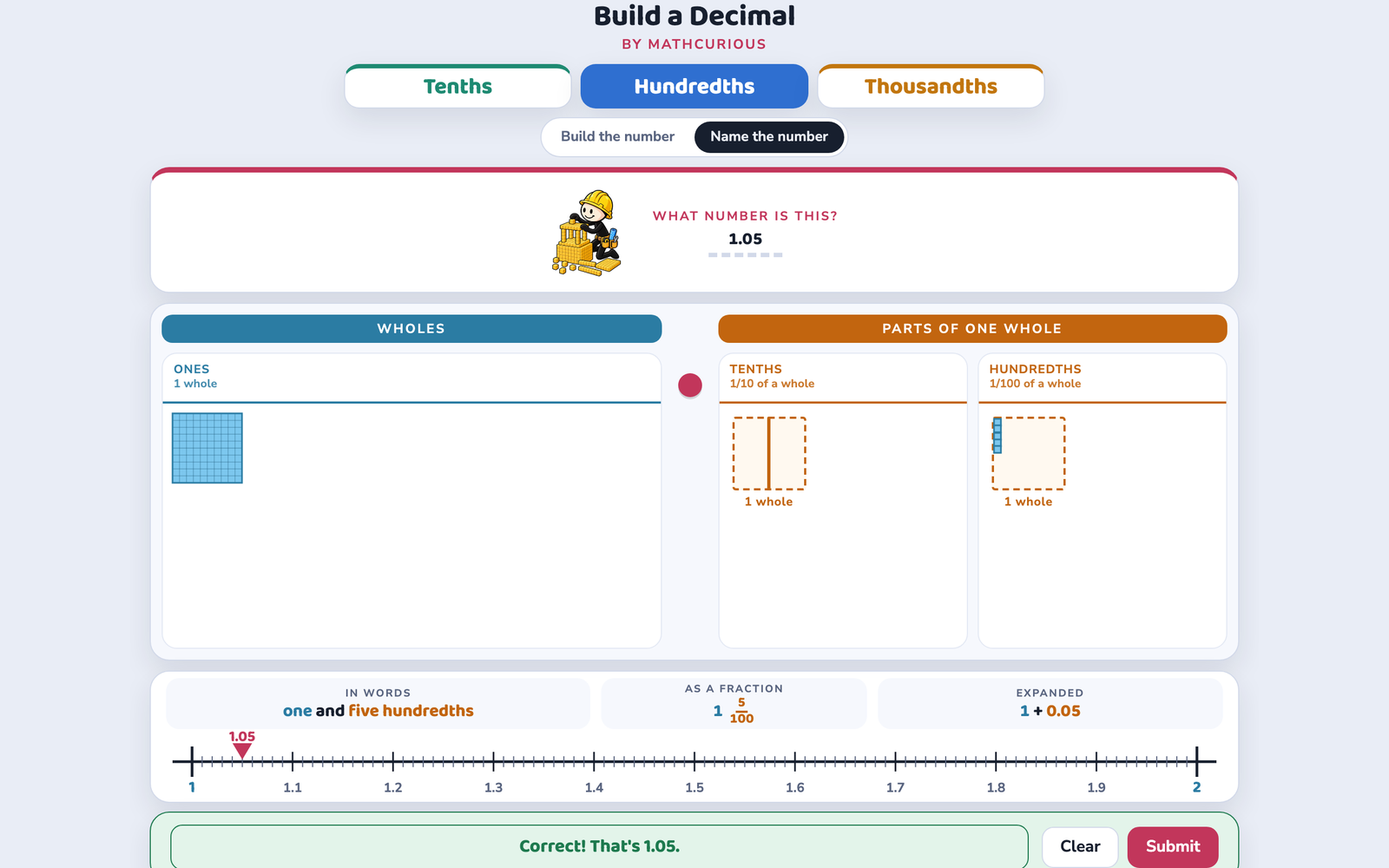
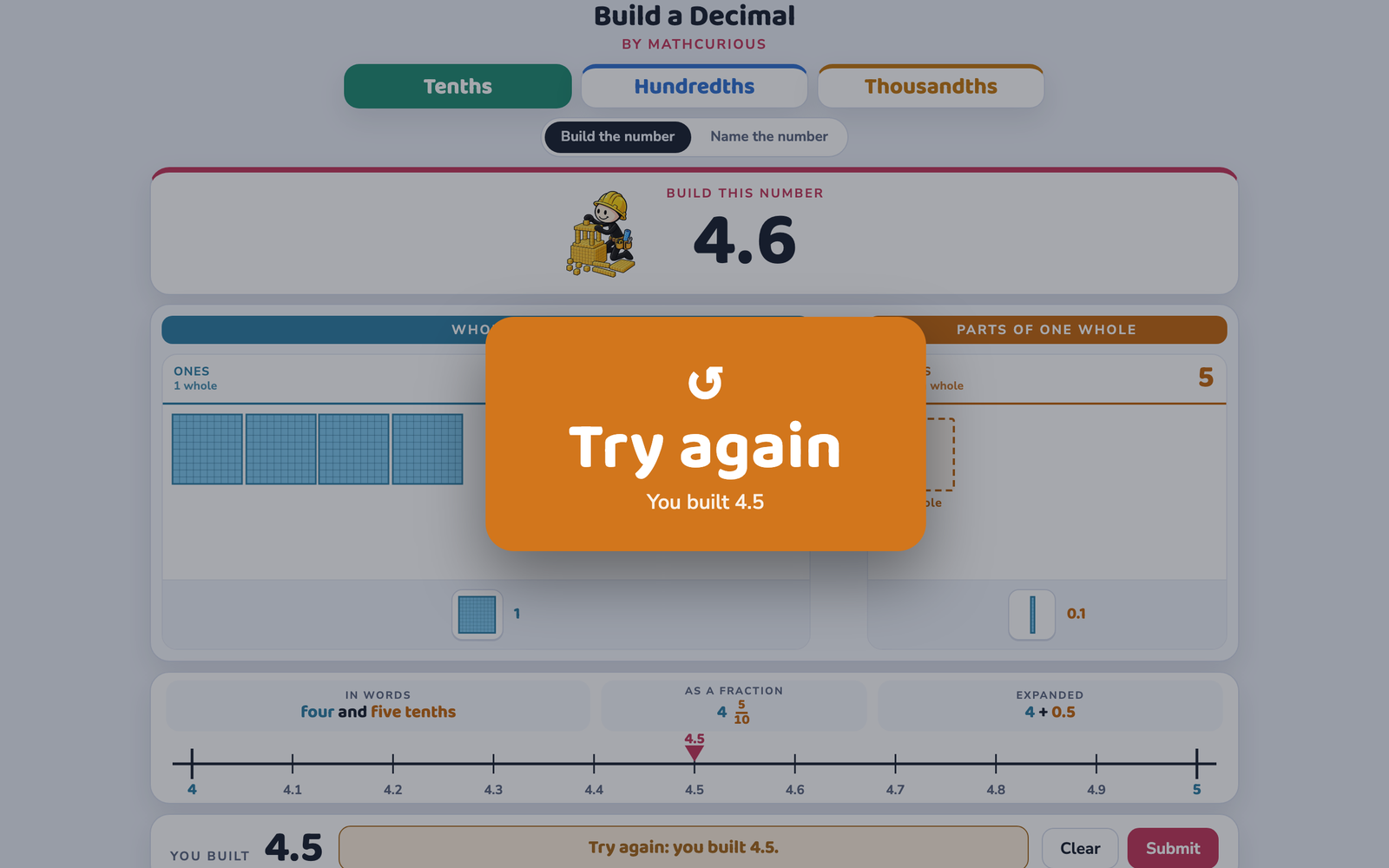
1.2 and 1.20 are both accepted, which makes a great talking point about equivalent decimals. A wrong answer shows what was built, so students can see the difference.
Works on any screen
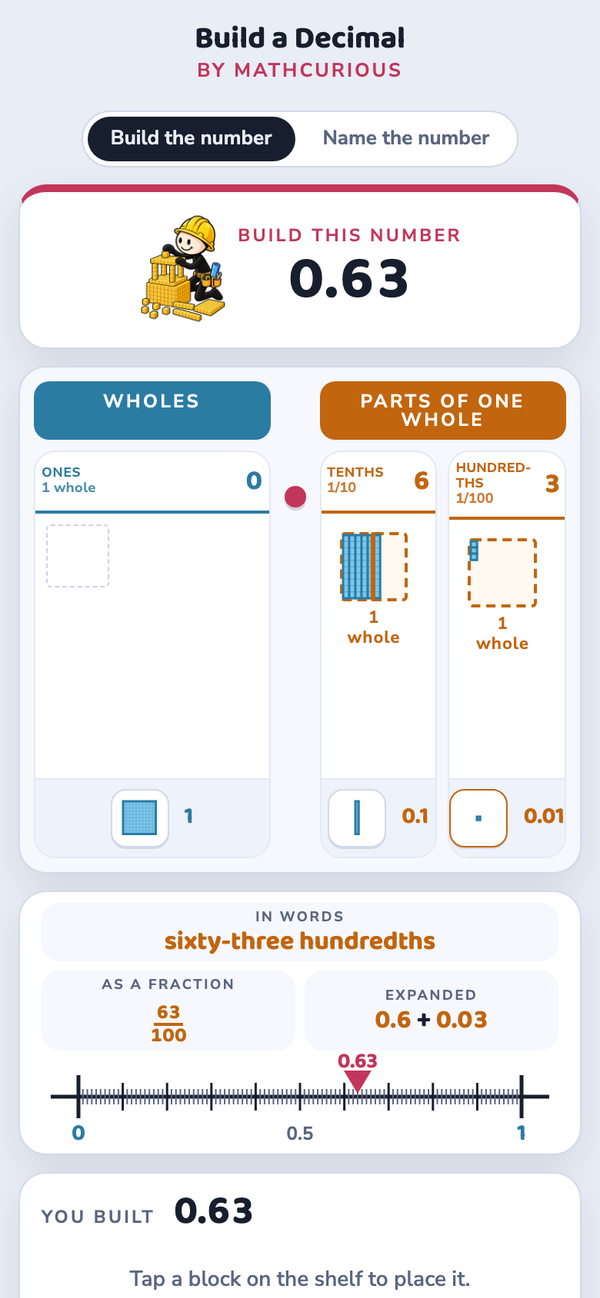
The blocks resize to fit any device, from Chromebooks and tablets to the classroom board, so a full mat of nine of every piece always fits without scrolling.
What students practise
- Decimal place value to tenths, hundredths and thousandths
- Reading and writing decimals in numerals, words and expanded form
- Decimal fractions: 0.47 = 47/100
- Equivalent decimals: 1.2 = 1.20
- Locating decimals on a number line
Teaching tips
- Start with the whole. Before building, ask "What is one whole here?" and "How many of these parts make one whole?"
- Build 1.2, then 1.20. Same blocks, same amount. Why doesn't the zero change the value?
- Read it with the place name. "Two and forty-seven hundredths" makes the fraction 2 47/100 obvious.
- Use the number line. Is 2.47 closer to 2 or to 3? Which two tenths is it between?
- Talk about the switch. When moving to Thousandths, point out that the whole has changed to the big cube.
Standards
- 4.NF.C.5 and 4.NF.C.6: decimal notation for fractions with denominators 10 and 100
- 5.NBT.A.1: place value, each place is 10 times the place to its right
- 5.NBT.A.3a: read and write decimals to thousandths in numerals, words and expanded form
Quick answers
Do students need accounts? No. It's a link, so there's nothing to sign in to.
What devices does it work on? Any device with a web browser, including Chromebooks, tablets, phones and the classroom board.
Is it a game? It's a self-checking tool: students build or name a number, check it, and get a new one. It works for modelling on the board as well as independent practice.
Get Build a Decimal
Give students blocks that show what a decimal is worth, and decimal place value stops being a row of digits.
Get Build a Decimal on Teachers Pay Teachers
More from Math Curious
- Digital Place Value Tools: Build a Number with 3 to 6 digits
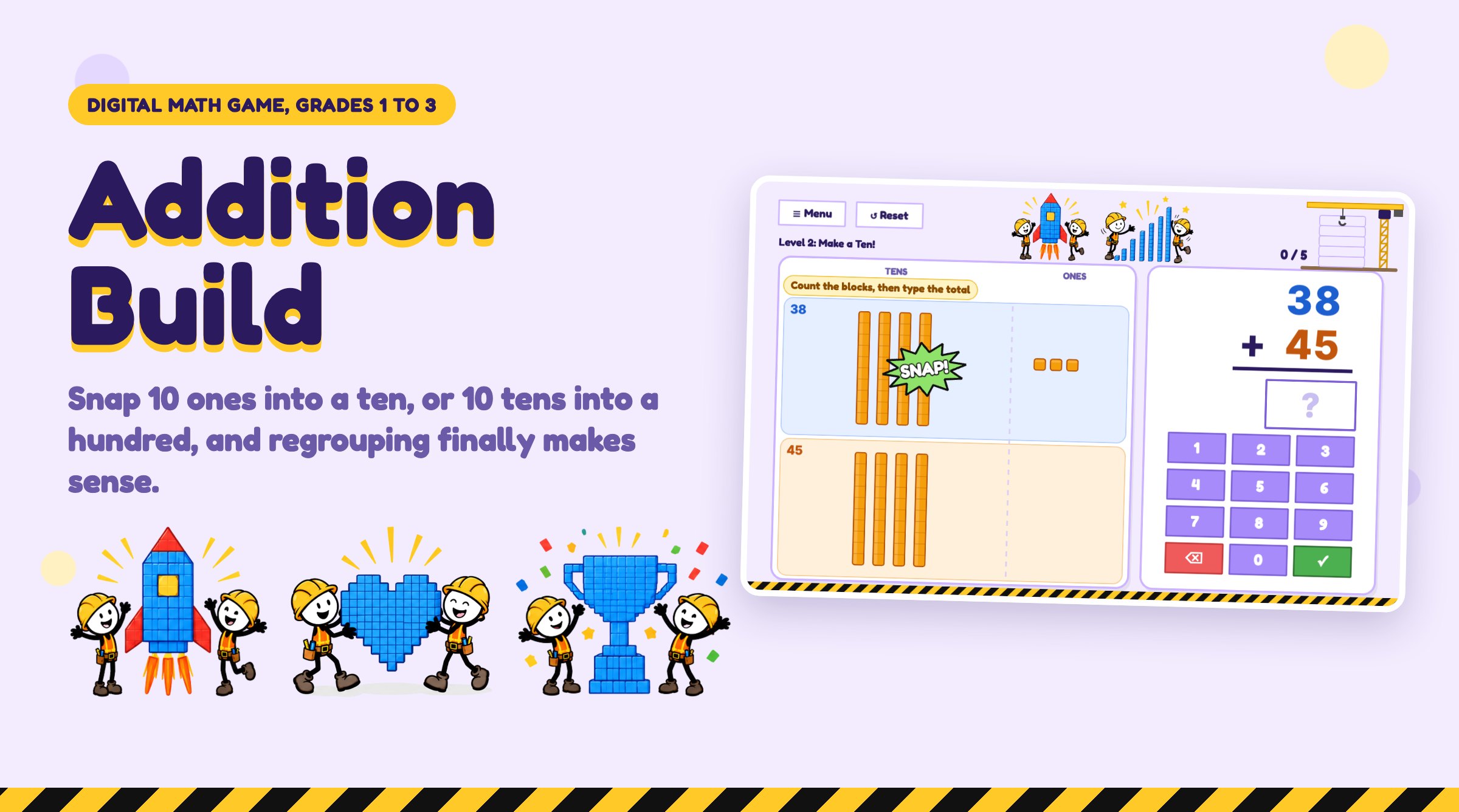
- Addition Build: snap 10 ones into a ten
- Subtraction Smash: smash a ten into 10 ones