Chicken Escape -Chapter 1
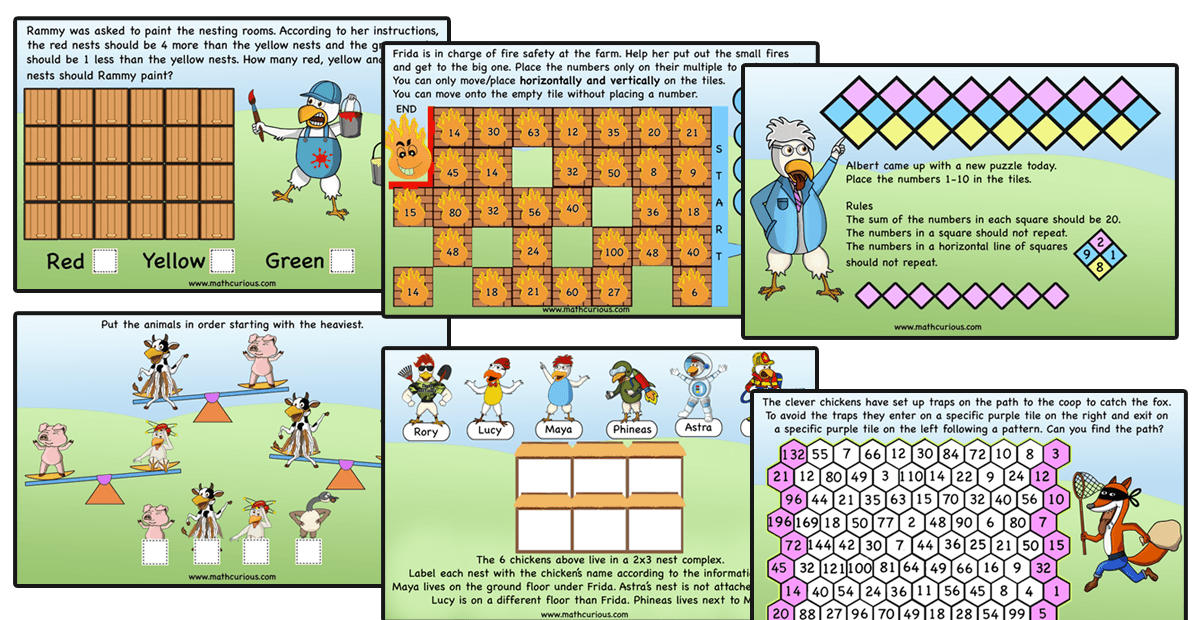
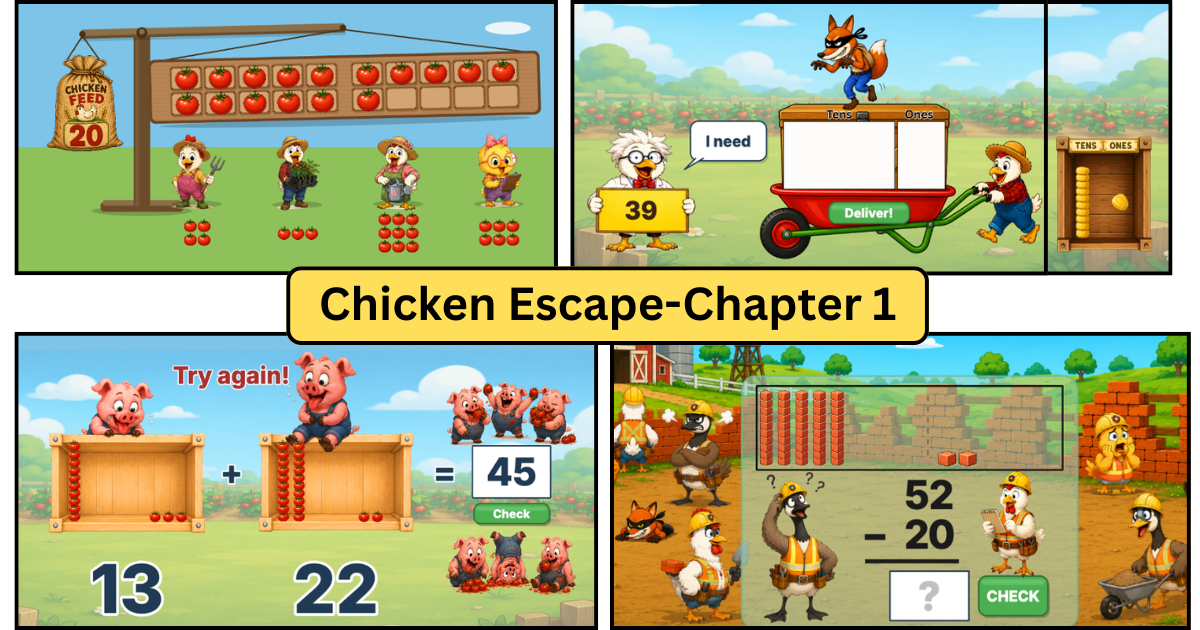
Chicken Escape — Chapter 1 is a collection of four browser-based math games (works on tablets as well) for students in grades K–3. Each game tackles a different early-math skill through a playful farmyard scene.
The chickens are officially in charge of the farm, and they need your students' help to keep things in balance. Whether it's making 10, sorting by place value, skip counting, or subtracting with regrouping, every level uses concrete visuals and a touch of farmyard chaos to make the math click.
No accounts. No downloads. No ads. Just click and play in any browser.
The four games
1. Balance the Scale
Skills: making 10 and 20, decomposing numbers, fact families.
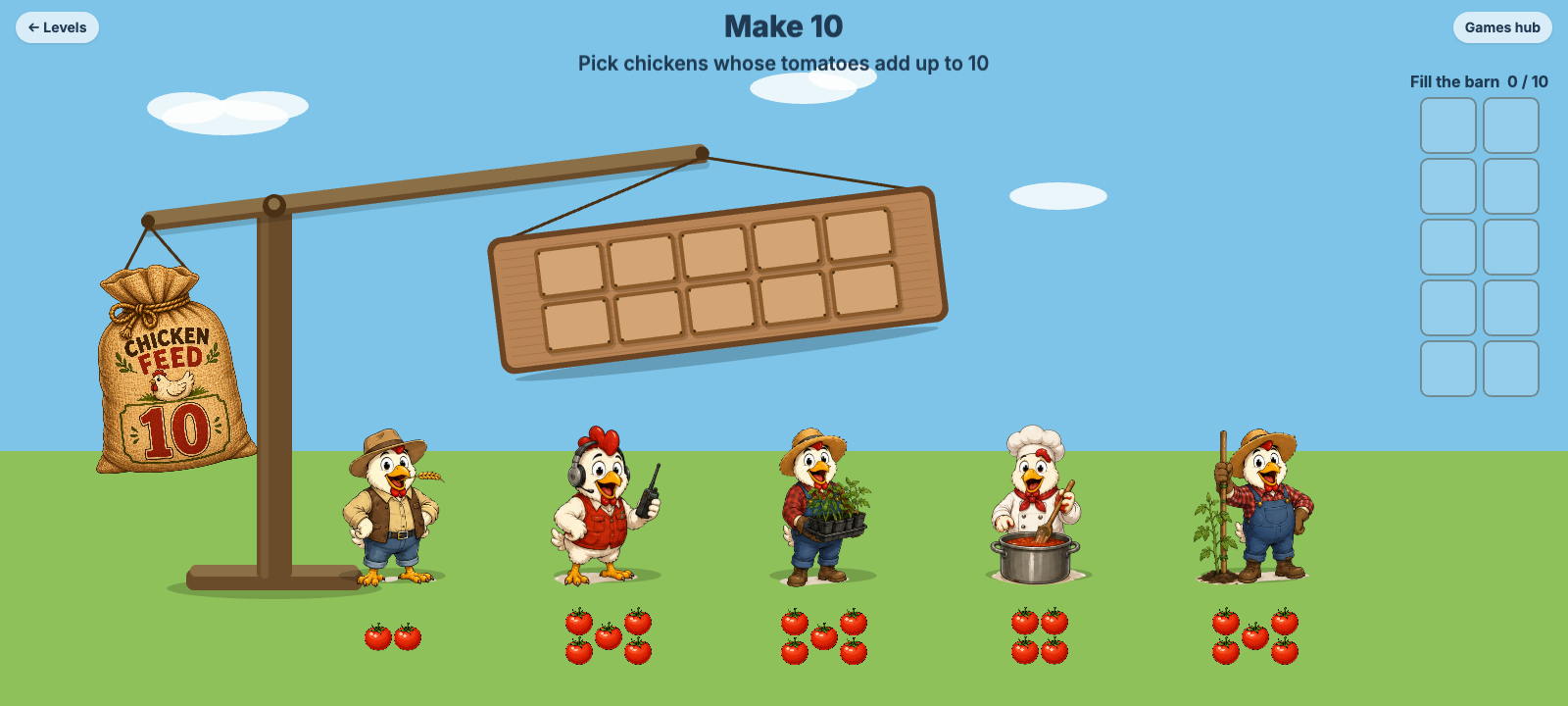
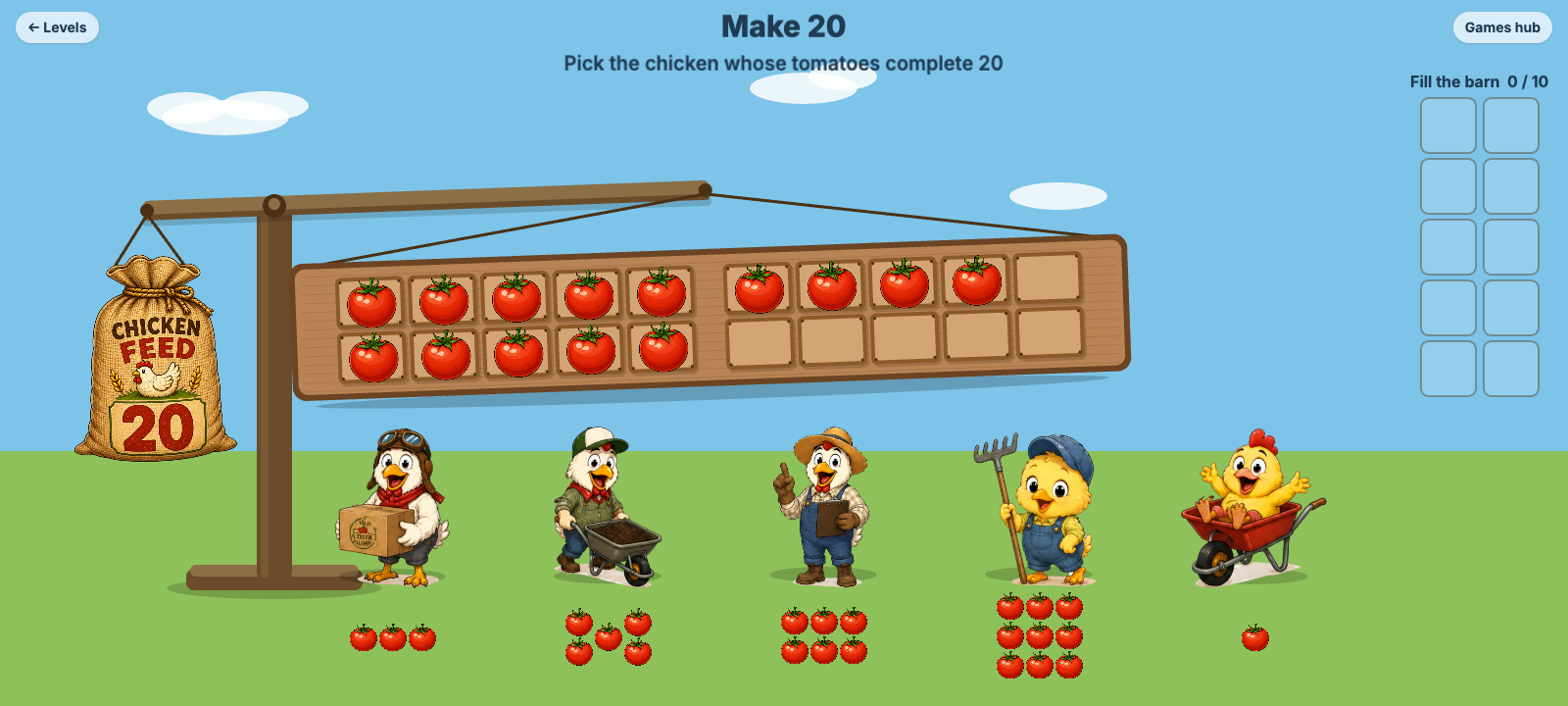
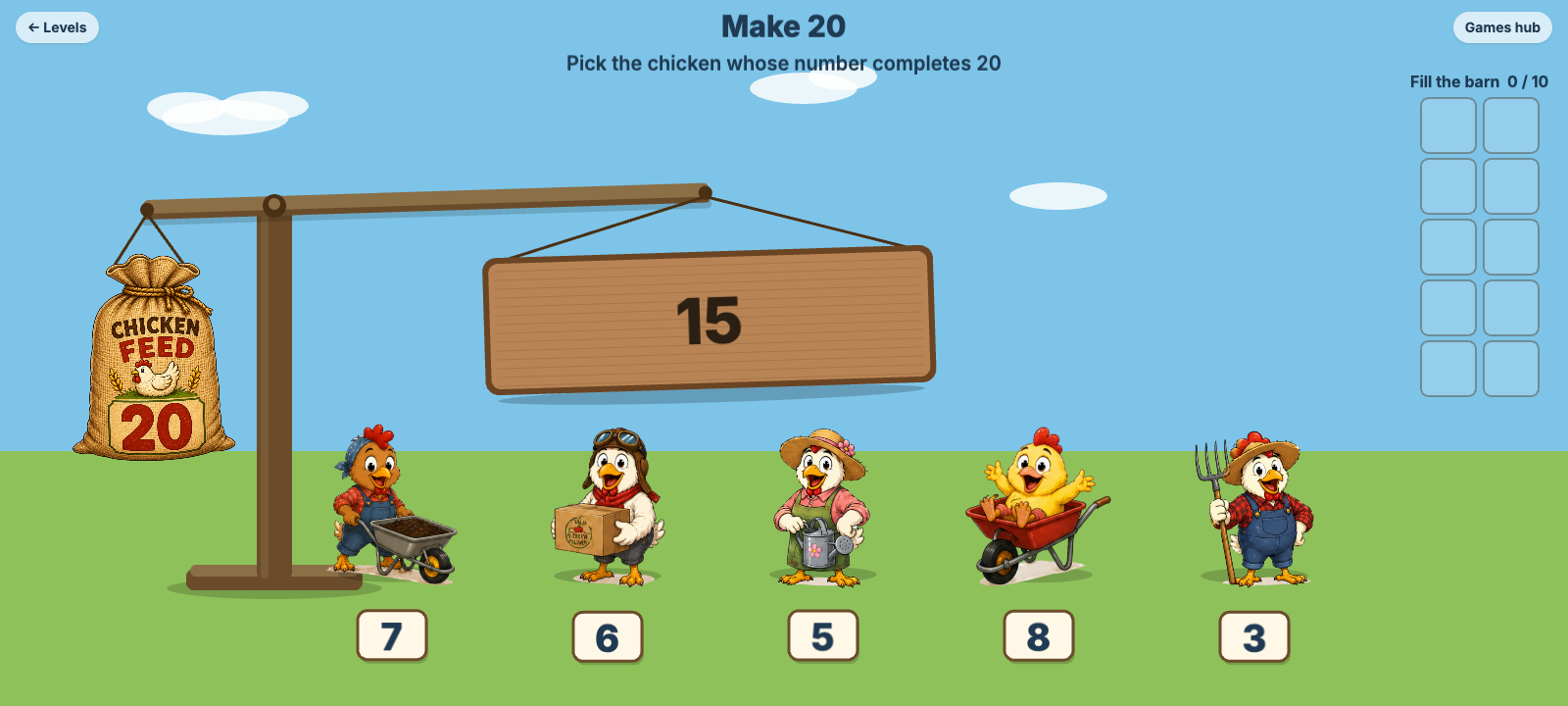
The pigs ate the kitchen scale's weights! Kids tap the chickens whose tomatoes will balance the scale at 10 or 20. Three levels progress from concrete (tomatoes) to abstract (numbers), giving students many low-stakes reps with the most important number-sense skill in K–2: making 10.
2. Harvest
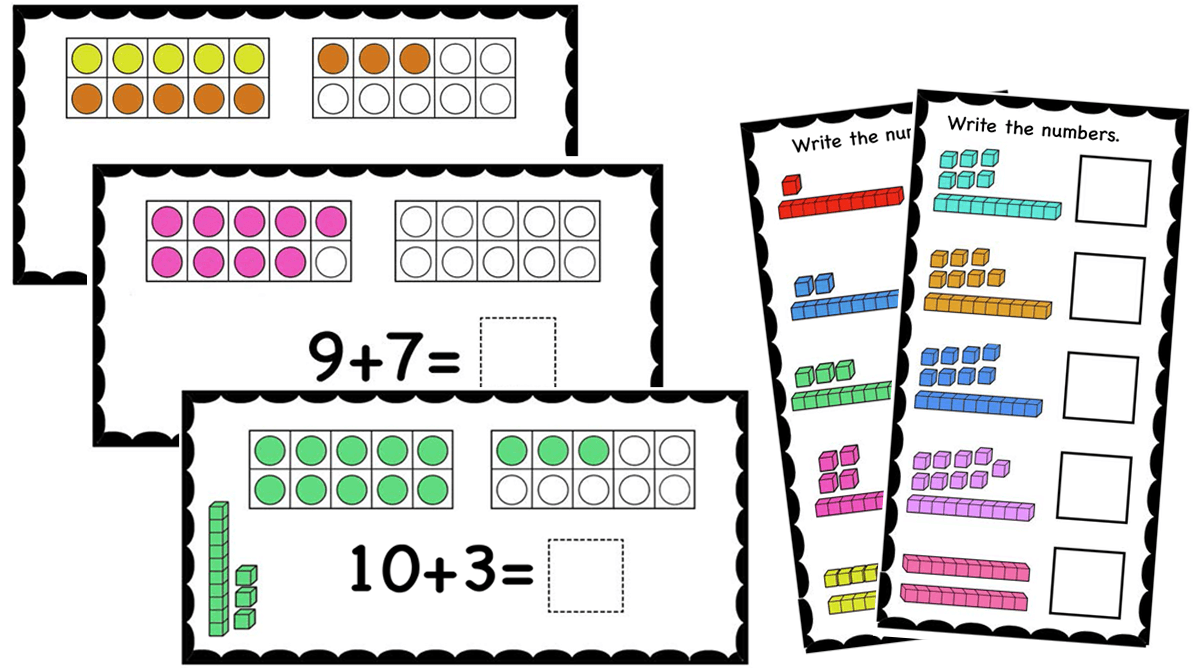
Skills: place value (tens & ones), addition up to 99, bundling.
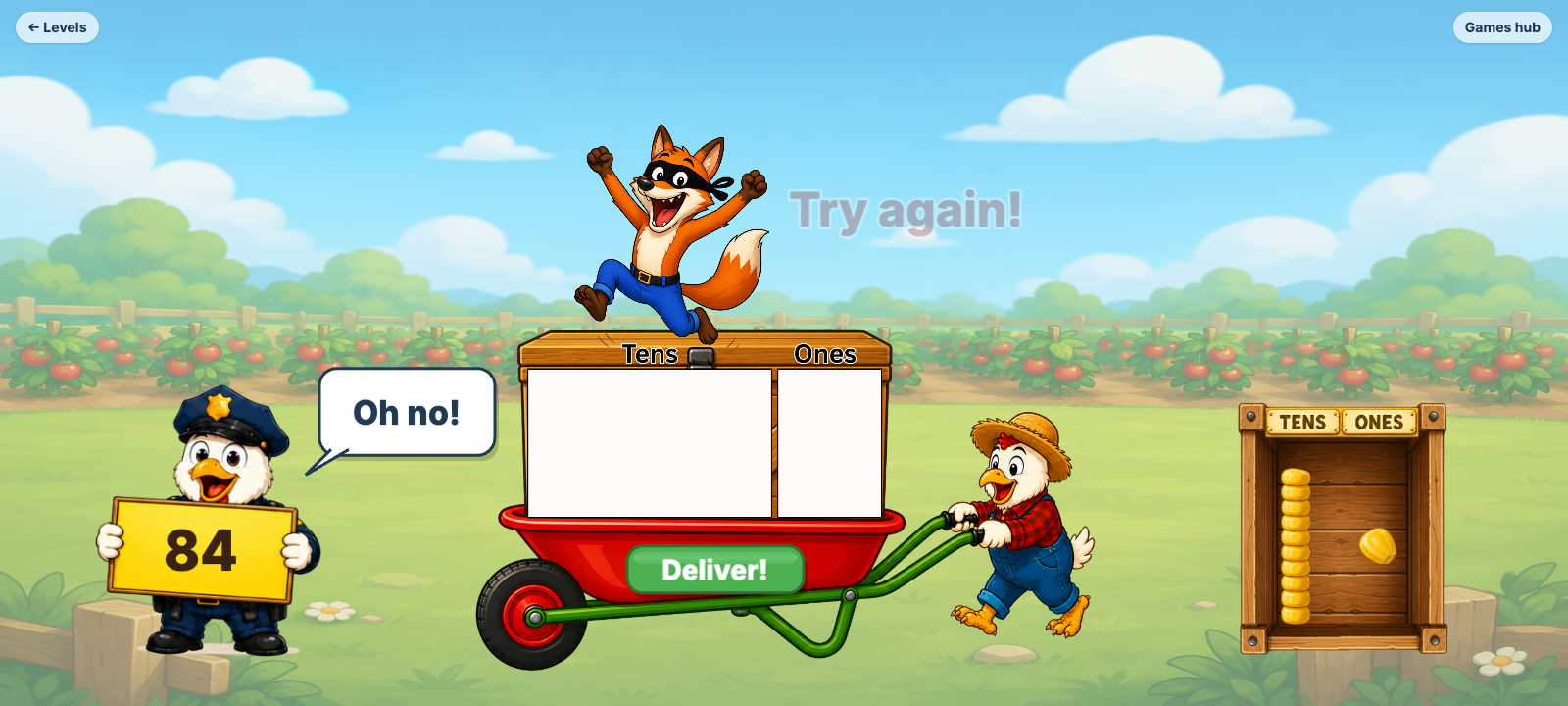
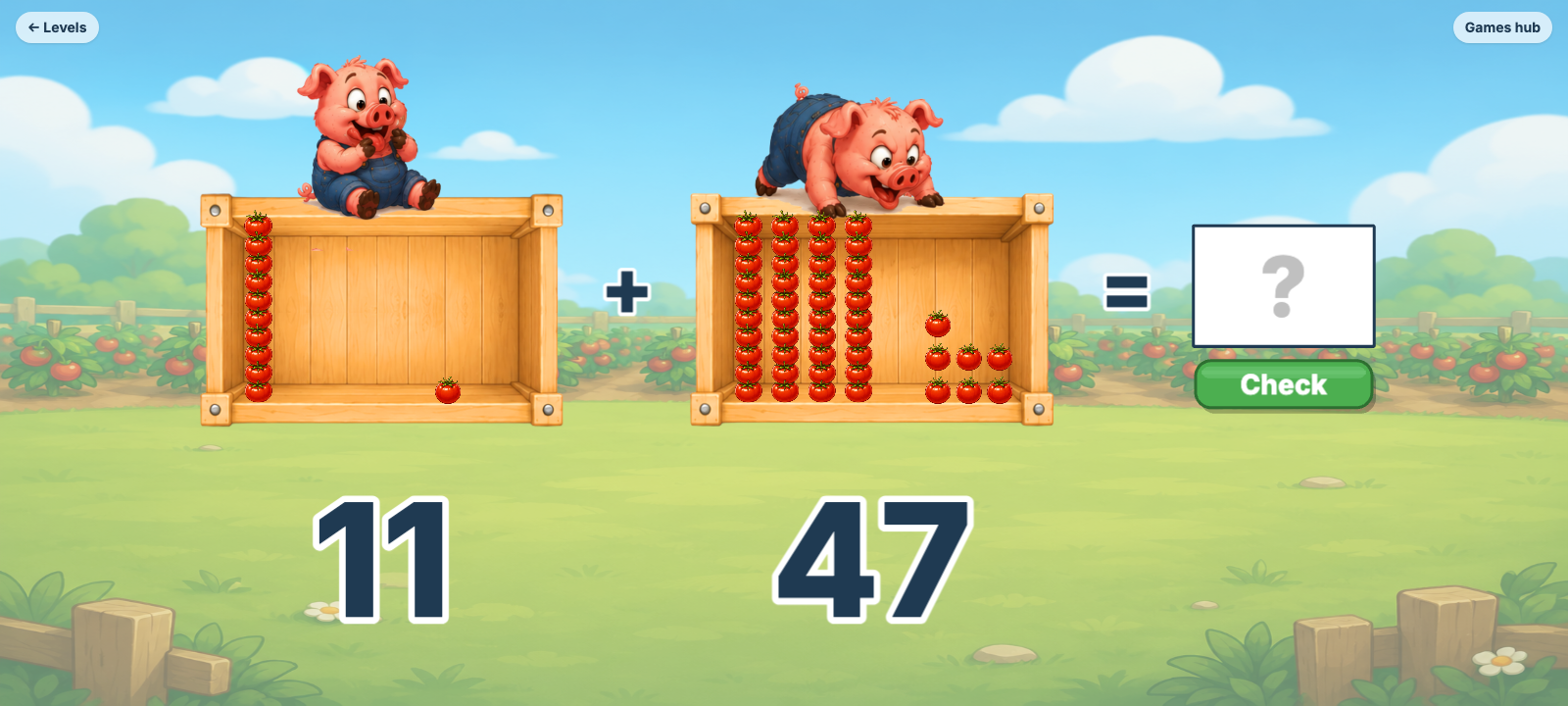
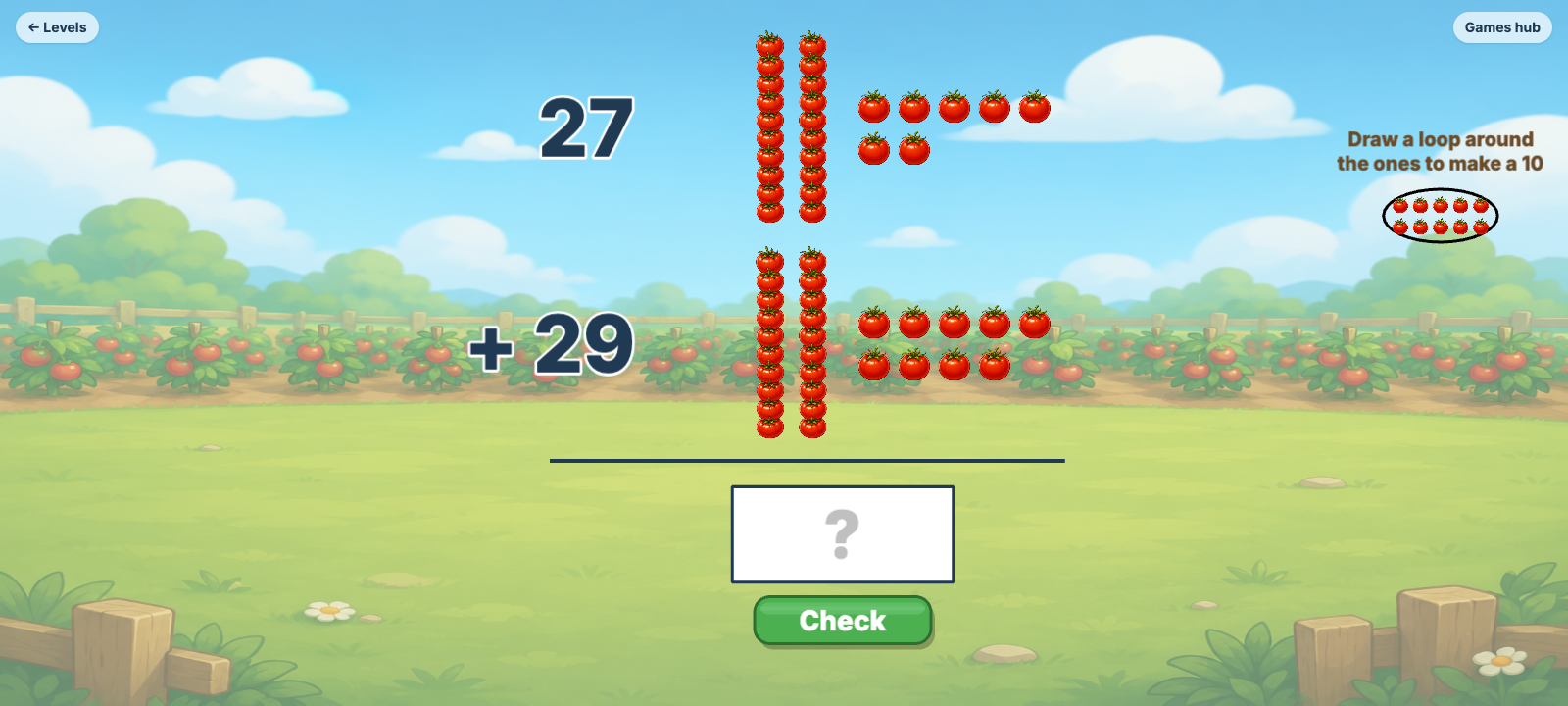
The chickens harvested kernels and tomatoes, but everything's piled up everywhere. Kids sort them into silos labeled "tens" and "ones," then learn to bundle 10 ones into a ten when a silo overflows. Three levels build from sorting → addition without regrouping → addition with regrouping.
3. Spot the Fox
Skills: skip counting (by 2s and 5s), attention, discrimination.
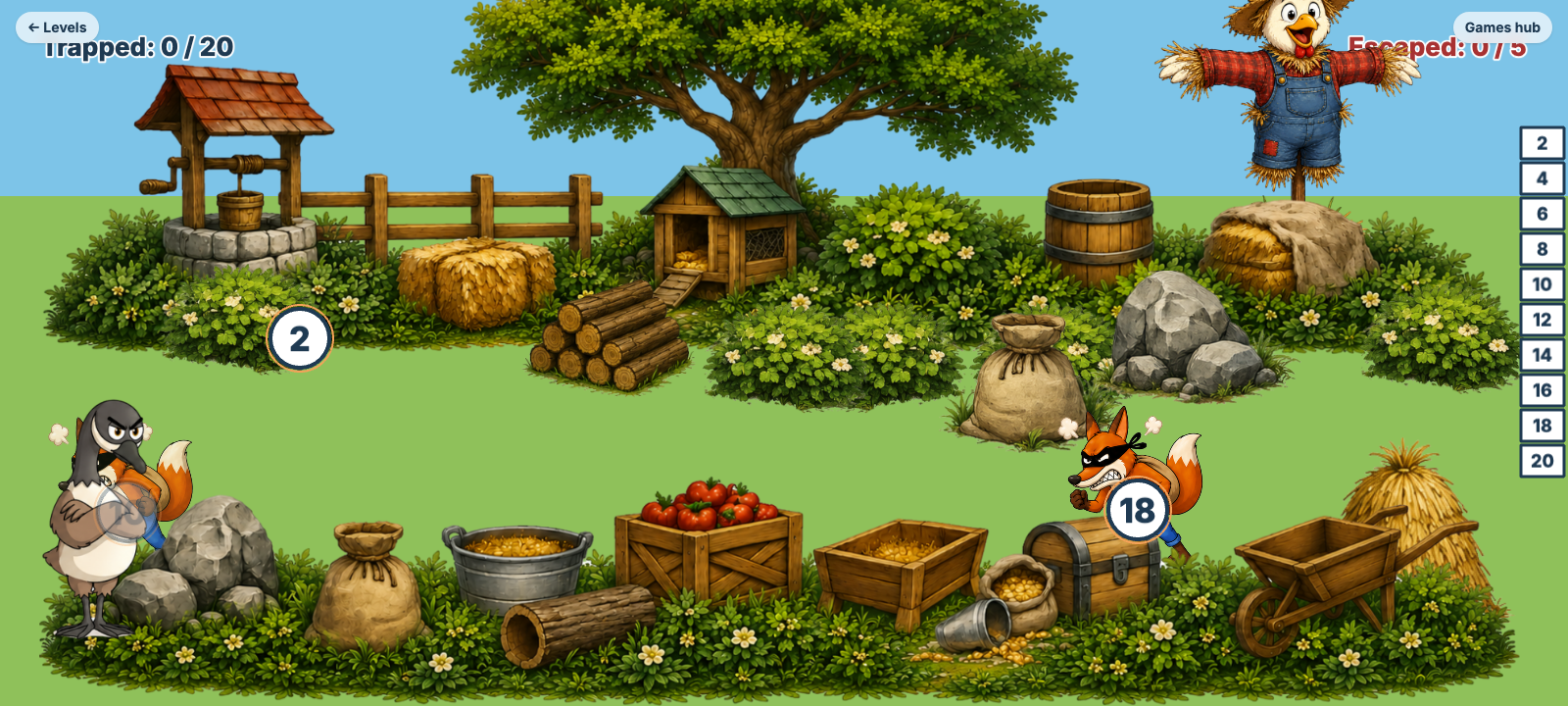
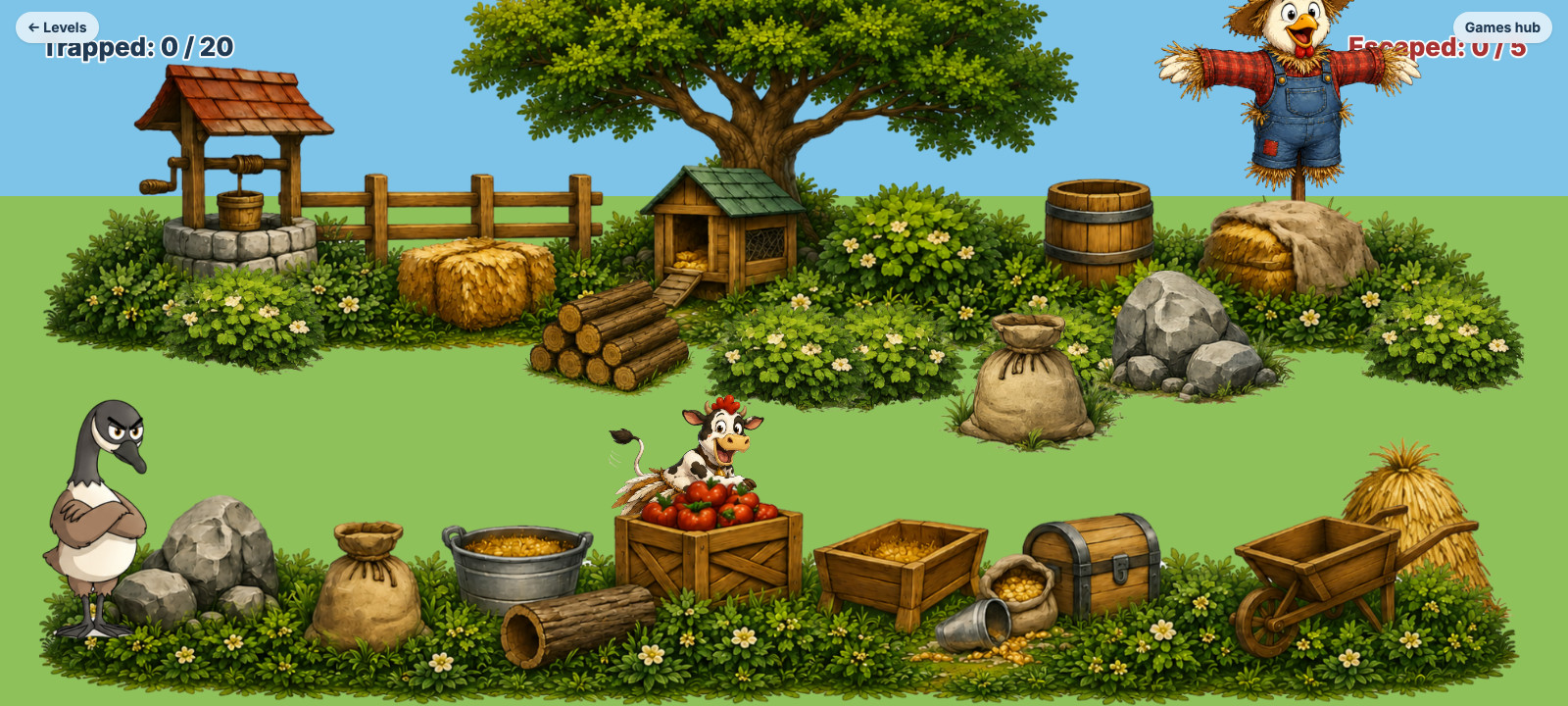
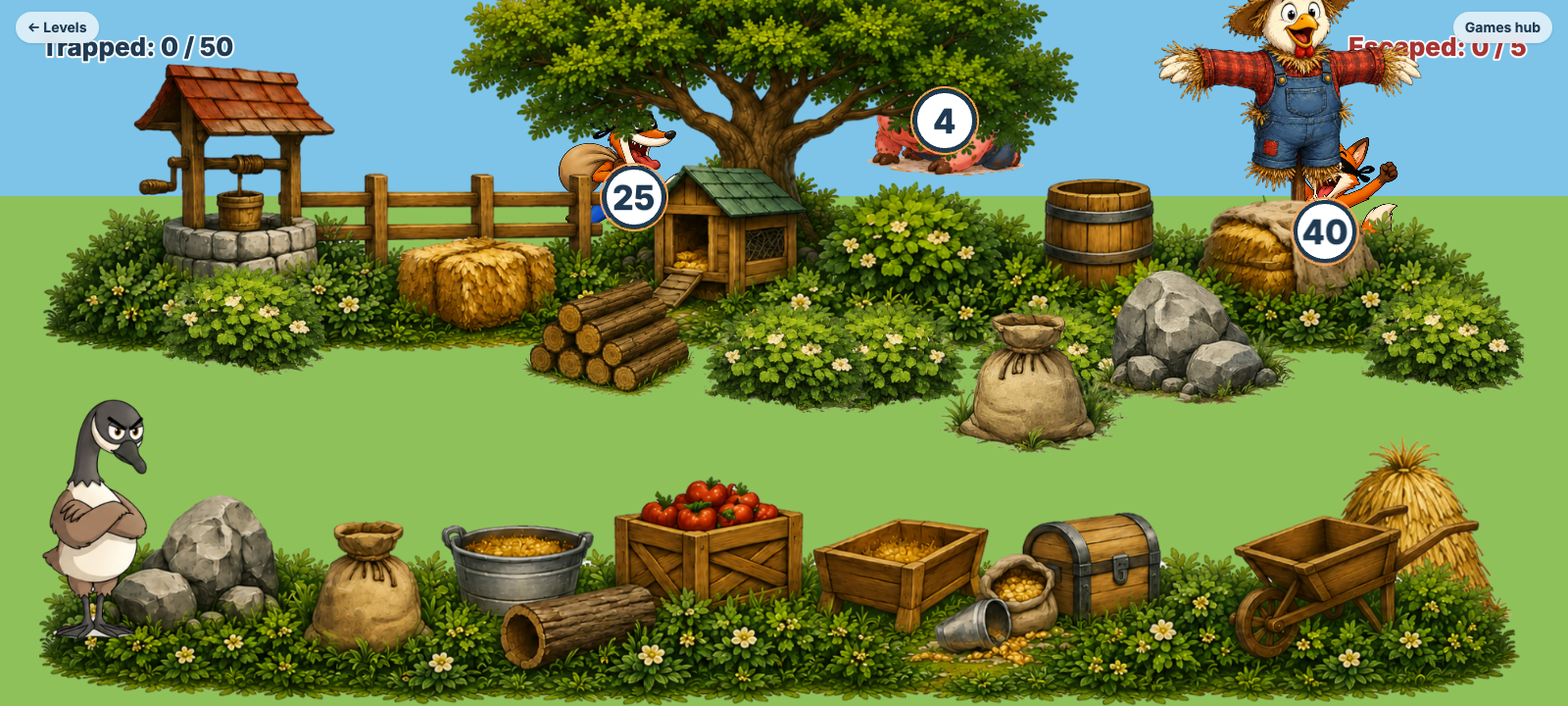
Foxes are sneaking through the bushes — students trap them by tapping in the right skip-count order (2, 4, 6, 8…). Levels 2 and 3 add distractor characters (pigs and Bessie the cow) so students learn to discriminate by species, not by random tapping.
4. Subtract Squad
Skills: subtraction from 20, two-digit subtraction without and with regrouping.
Three subtraction levels, each with its own scene and mechanic:
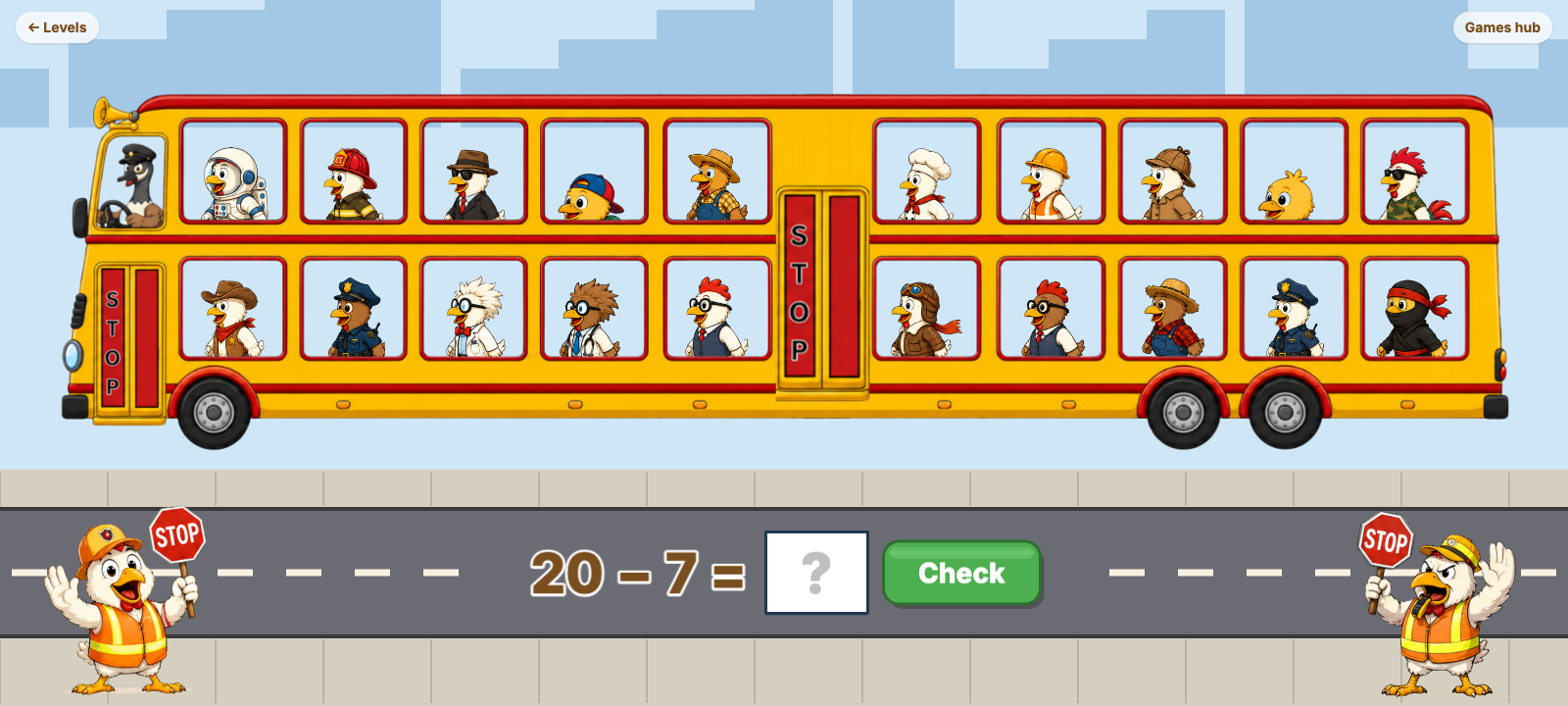
- Level 1 — All Aboard, All Off! A bus pulls into Cluckville Station with 20 chickens. Tap windows to let passengers off and count who's still on board. (Subtract from 20.)
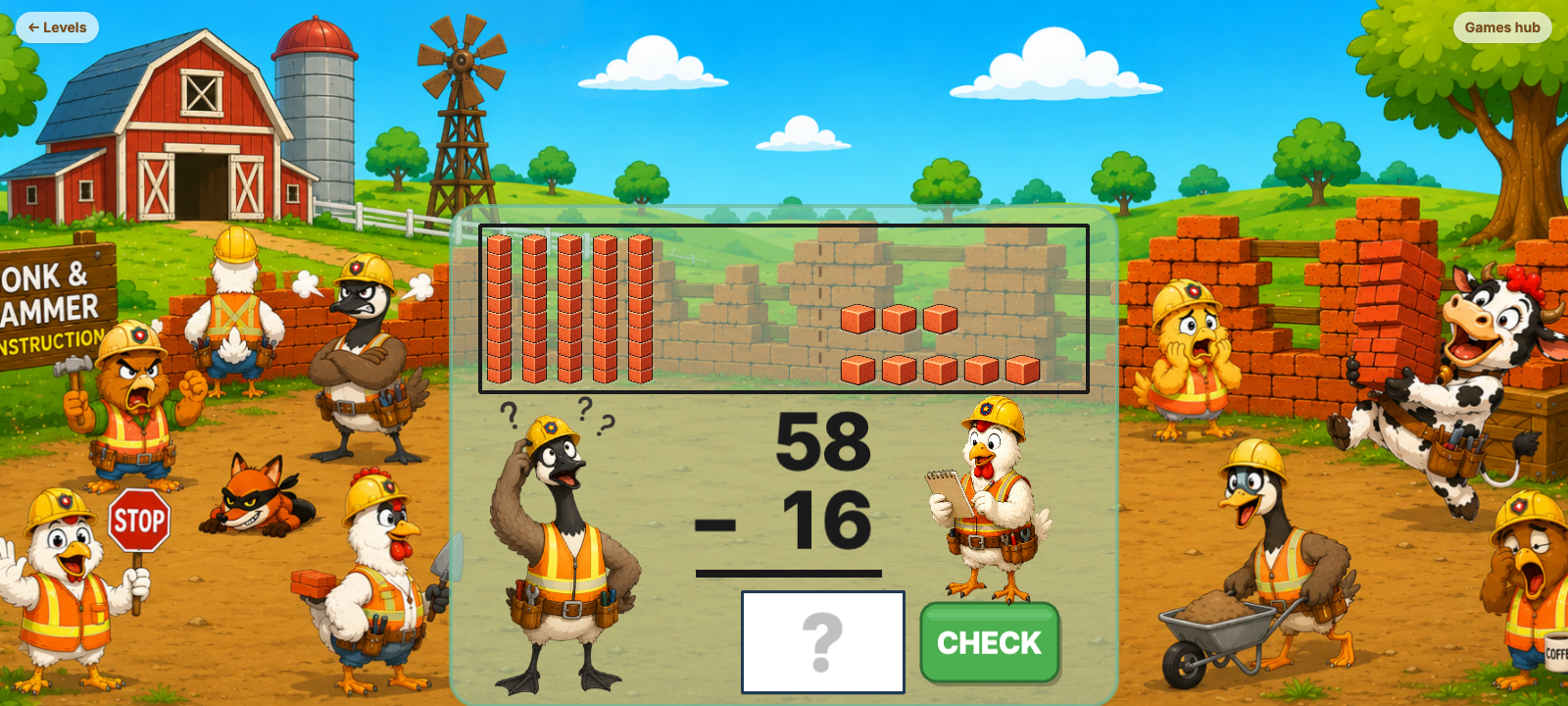
- Level 2 — Build the Fence. The chickens are fortifying their fence with bricks. Tap rods (tens) and single bricks (ones) to subtract. (Up to 99, no regrouping.)
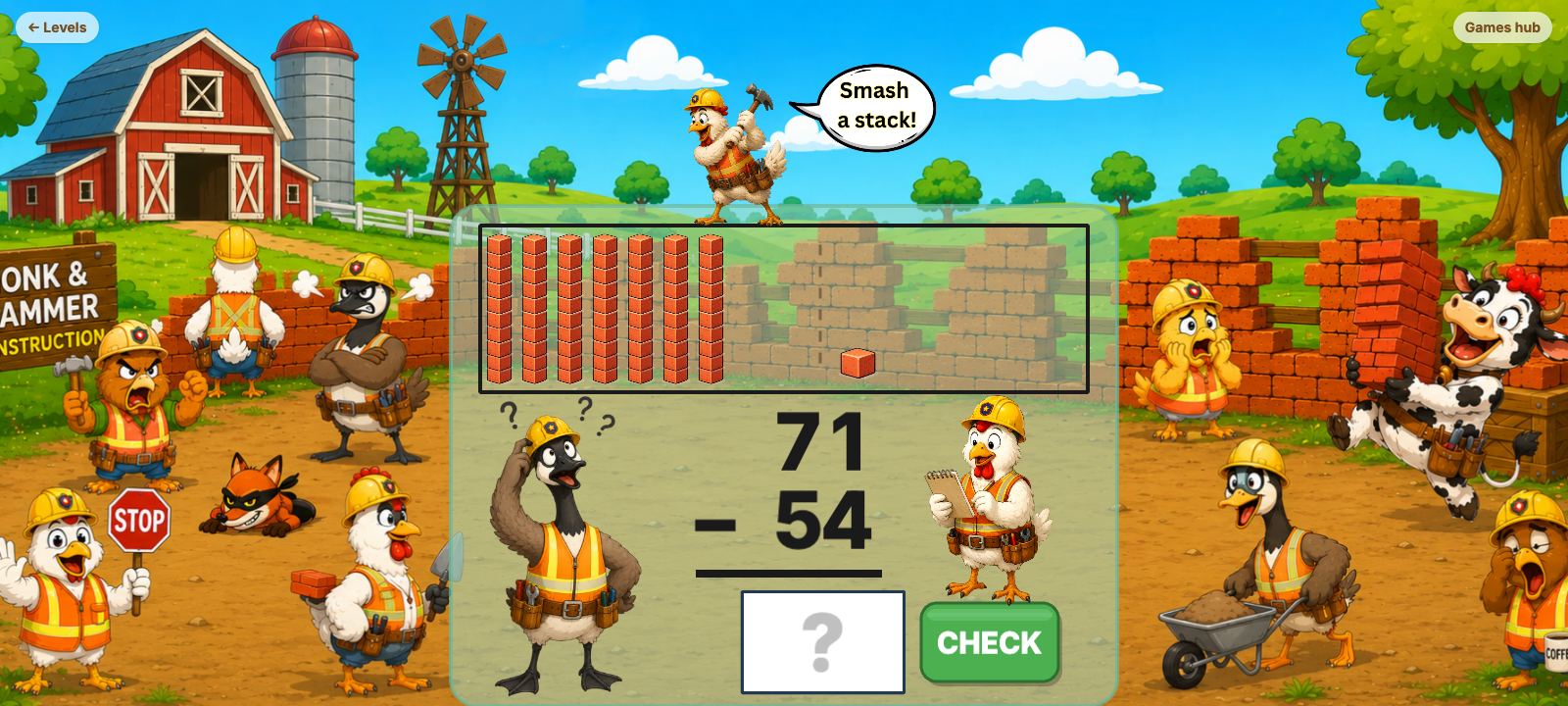
- Level 3 — Smash the Stack. Need more ones? Tap the hammer chicken to break a tens-rod into 10 separate bricks — the concrete model of regrouping that classroom textbooks usually only show with crossed-out digits.
Skills practiced across the collection
- Making 10 and 20
- Place value: tens and ones
- Composing and decomposing numbers
- Adding and subtracting within 100
- Regrouping (the visual, hands-on version)
- Skip counting by 2s and 5s
- Number sense and counting fluency
- Visual attention and discrimination
Ways to use it
In the classroom
- Whole-class warm-up: project on the smartboard for a 5-minute number talk.
- Math station: set up at a single device during workshop time.
- Differentiation: levels within each subgame let you assign easier or harder challenges without anyone noticing.
- Quick check-in: watch a child play for two minutes — you'll see exactly where they're stuck.
At home
- Daily 10: encourage ten focused minutes after homework. Short and sticky beats long and forced.
- Co-play: sit beside your child and ask "How did you know that?" — they'll articulate their thinking.
- Bookmark by skill: each level has its own URL, so you can send your kid straight to the skill they need that week.
Tips for getting the most out of it
- Let them experiment. The mechanics are discoverable. Kids will figure out the rules in 30 seconds without your help.
- Wrong answers are funny, not punitive. Clumsy Bessie spills cement or face-plants in the mud. Mistakes are part of the bit.
- For regrouping specifically, Subtract Squad Level 3 is the best concrete demo: the hammer-chicken animation makes "borrowing 1 ten = getting 10 ones" land in a way crossing-out-the-2-and-writing-a-12 just doesn't.
- The 📖 story panel is optional context. Read it together to give the math a narrative hook.